
Propane fire pit brands love a giant BTU number.
They put it near the top of the product page and treat it like horsepower. A 100,000-BTU fire must make twice as much heat as a 50,000-BTU fire, right?
Not necessarily.
A bigger number proves the fire pit can burn propane faster. It does not prove that more useful warmth reaches the people sitting around it.
The fire may be hotter. It may also just be thirstier.
What a BTU Actually Measures
BTU stands for British thermal unit. One BTU is the amount of energy required to raise one pound of water by one degree Fahrenheit.
Great. Very British. Very unit.
The rating advertised for a propane fire pit is normally expressed in BTUs per hour. That number tells you how quickly the appliance consumes the energy stored in its fuel.
It measures what goes into the fire. It does not directly measure how much useful heat reaches your hands, legs, face, or the cold person quietly dragging a camp chair closer.
Fuel consumption is the input. Warmth is the result.
BTUs Are Closer to Gallons per Hour Than Horsepower
BTUs per hour are not horsepower. They are not even MPG.
They are closer to gallons per hour.
Horsepower tells you how much power an engine can produce. MPG tells you how much useful travel you get from the fuel it consumes. Gallons per hour tells you how quickly it drains the tank.
Yet propane fire pit brands routinely market their fuel-burn number like it measures performance.
Nobody buys a truck because it drains the tank with authority.
A larger fire may produce more heat, but the BTU rating alone cannot tell you how much of that heat reaches the campers. It does not explain what kind of heat the fire creates, where that heat travels, or how much propane it takes to deliver a useful result.
Where the Heat Goes

Burning propane releases heat. The question is what happens to it next.
Hot combustion gases rise. Outdoors, a large share of that heat can move upward or get carried away by the wind. A giant flame may look impressive while doing a wonderful job of warming the air above camp.
Very useful if your camping party includes low clouds.
Radiant heat works differently. It travels outward as infrared energy and warms your body directly. That is the deep warmth people recognize from glowing wood coals, even after the flames have settled down.
A BTU rating does not tell you how much energy becomes visible flame, how much becomes radiant heat, or how much leaves with the hot exhaust. It only tells you how much energy the burner consumes.
HOWL Focuses on What the Fuel Does
HOWL publishes BTU ratings because fuel consumption matters. You need that number to estimate runtime, choose the right tank, and figure out how much propane to bring.
We just do not pretend it is a warmth score.
Instead, we engineer what happens between the tank and the people around the fire.
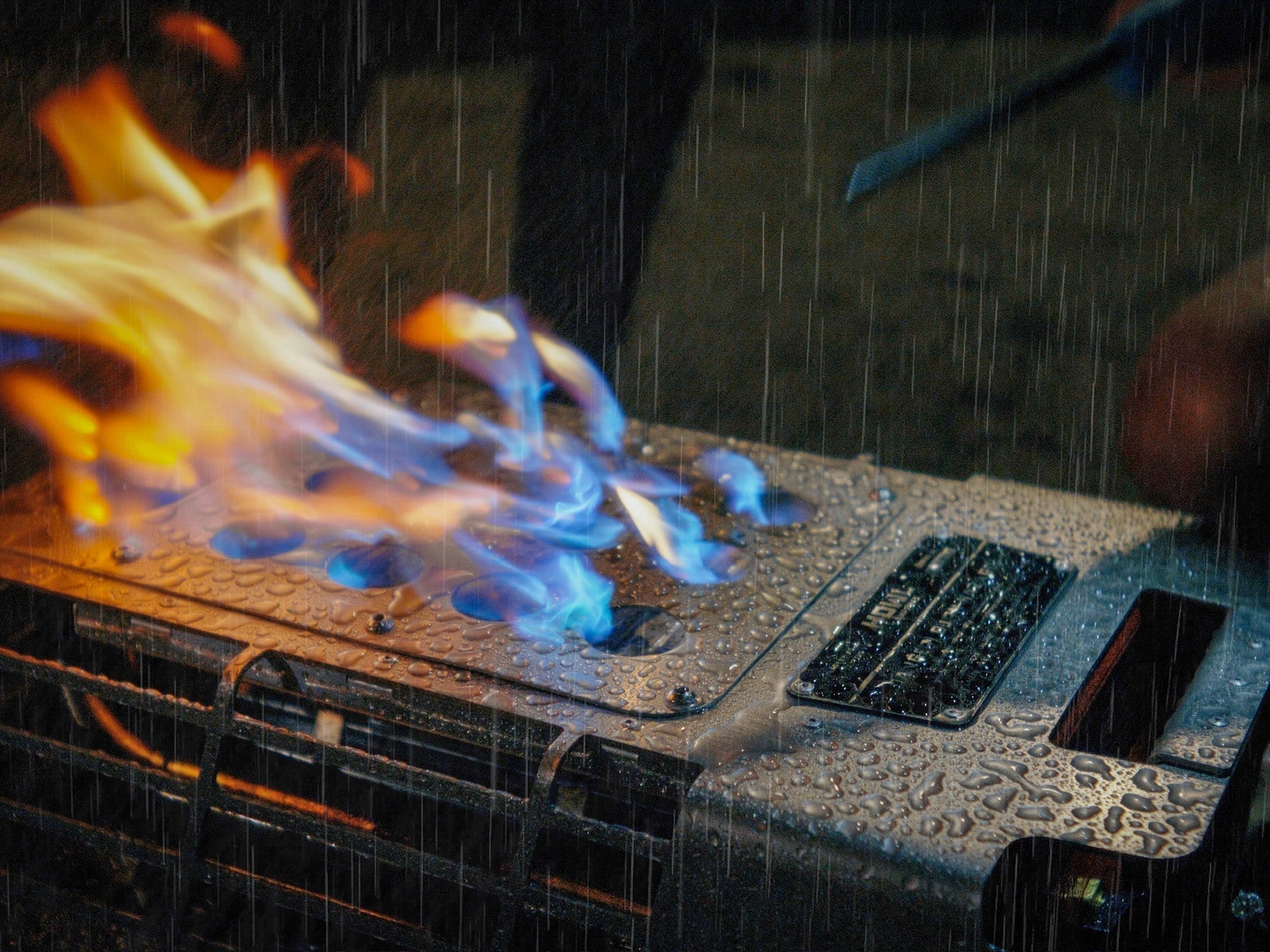
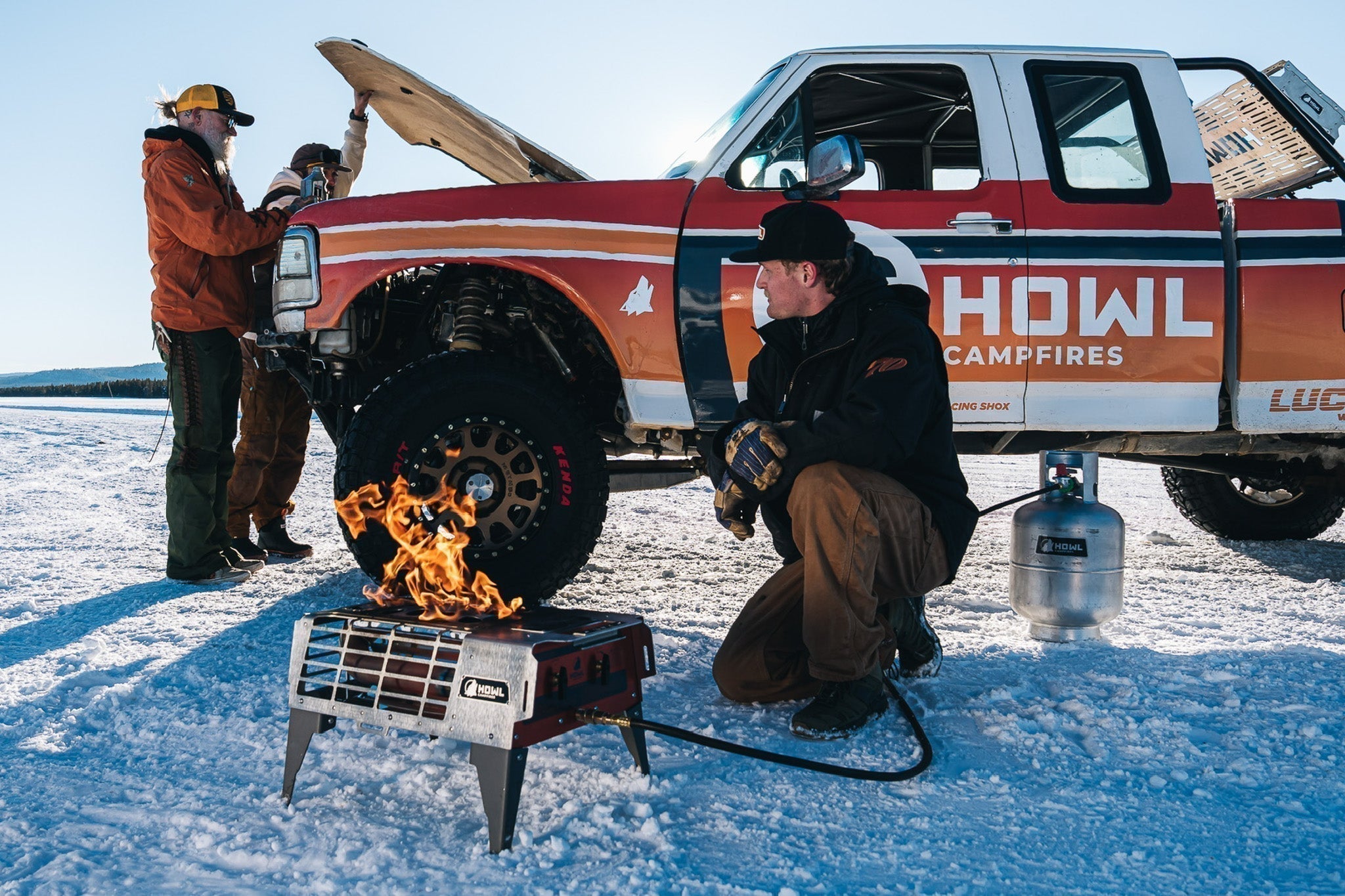
The A-Flame uses 160 micro-emitters to create a tall, exposed flame with the movement, firelight, and warmth people expect from a campfire. It is not simply a giant burner with the valve opened farther.
On BarCoal-equipped HOWL Campfires, BarCoal turns propane into glowing stainless steel radiant heat. It recreates the deep, direct warmth normally produced by a bed of wood coals instead of relying only on flame and rising hot air.
The EchoHeat Reflector Shields then direct more of that infrared energy outward toward the people around the fire and away from the ground.
They do not create extra energy or somehow force hot exhaust back down from the sky. They help put the radiant heat where it can do some good.
Your knees. Your hands. Your friend who said a hoodie would be enough.
A-Flame and BarCoal use different methods, but we developed both around the same question:
What useful result are we getting from the fuel?
Not:
How large can we make the number on the box?
Why HOWL Does Not Brag About Burning More Propane
Opening a valve farther is easy. Turning fuel into better firelight and useful warmth takes engineering.
Imagine two propane fire pits. One burns an enormous amount of fuel to create a large plume of flame and hot exhaust. The other consumes less propane while delivering visible firelight and more useful heat to the people sitting around it.
The larger BTU rating cannot tell you which fire works better.
It can tell you which one empties the tank faster.
That is why HOWL does not build its story around winning the propane-consumption contest. Burning more fuel is not automatically better performance.
The engineering happens between the tank and the people around the fire.
What the Number Cannot Tell You![]()
![]()

When comparing propane fire pits, ask what the fire does with the fuel it burns.
Does it create useful firelight? Does it produce radiant heat? Does that heat reach the people around it? How long does the tank last while doing all of that?
A big BTU number may belong to a great fire.
It may also mean somebody opened the valve farther.
A BTU rating tells you what goes in. Your body tells you what came out.
HOWL is not trying to build the thirstiest fire.
We are trying to build a better one.