
A bigger flame does not always start with a bigger hole.
That is the easy way to build a propane burner. Take a pipe. Drill some holes in it. Push propane through those holes. Light it.
Congratulations. You built the thing under half the backyard grills in America.
That setup makes fire, but it does not necessarily make a campfire. The flames are usually short, separate, and spaced apart. They look less like something you want to gather around and more like a burner doing burner things.
We wanted something different.
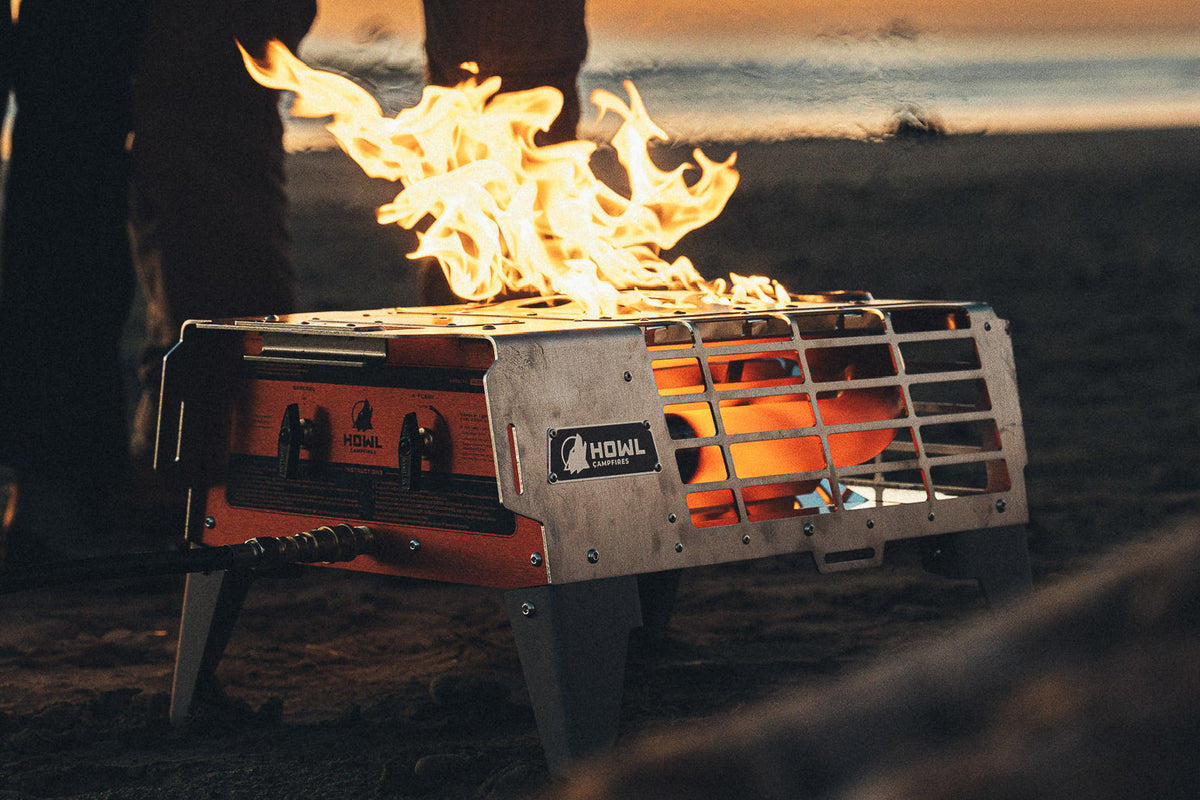
We wanted a flame that looked alive: tall, bright, exposed, and moving like a campfire instead of a row of burner ports.
That is why HOWL uses the A-Flame Burner.
One Flame Built From 160 Smaller Ones
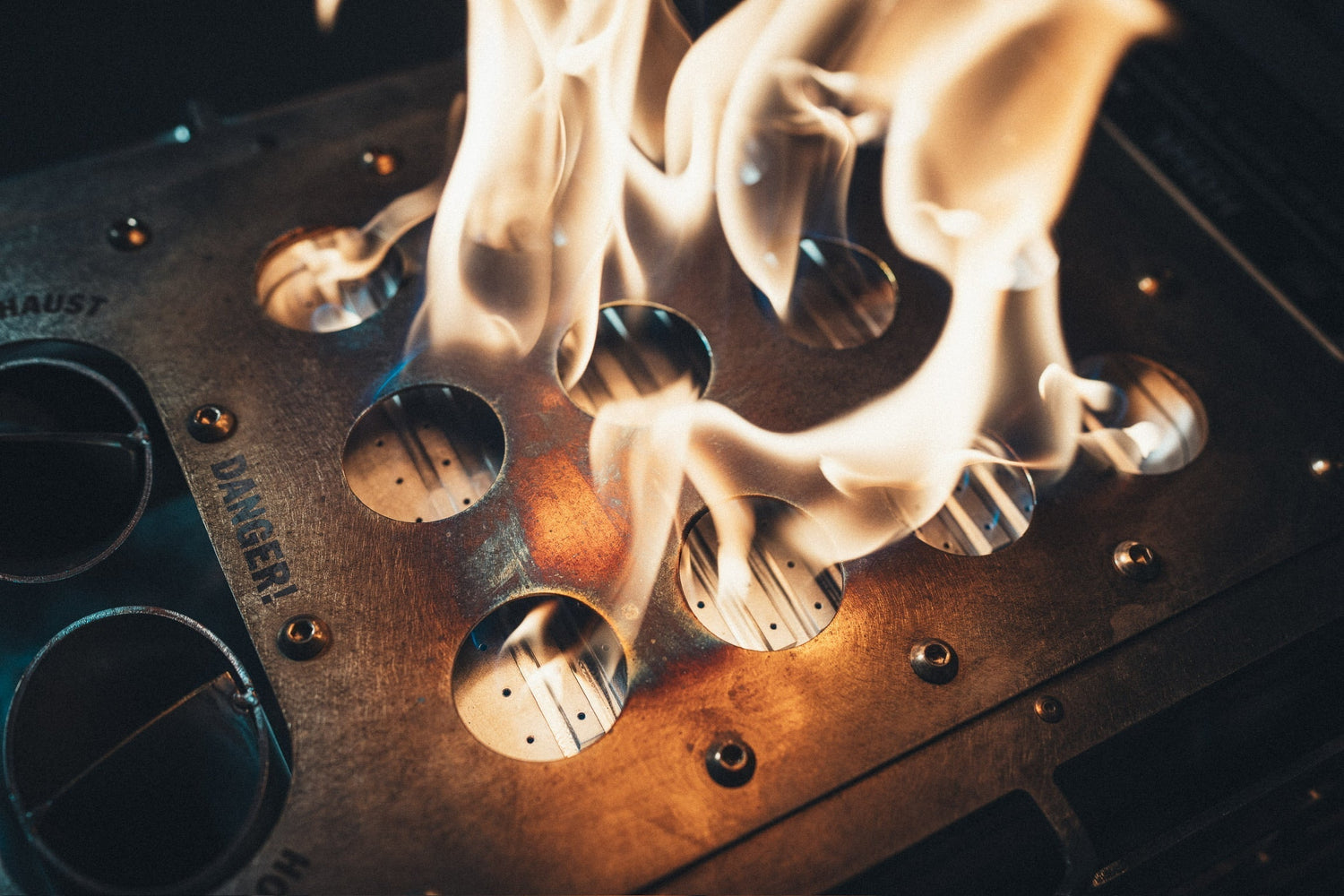
The A-Flame Burner does not rely on a few large holes spaced far apart. It uses 160 precision-machined micro-emitters, each creating its own tiny flame.
On their own, those little flames are not the point.
The point is what happens when they are close enough to work together.
The flame fronts interact. They pull together. They climb. Instead of creating a row of separate little flames, the A-Flame builds one taller, brighter flame from 160 precise starting points.
If you have ever held two small flames close together and watched them lean into each other, you have seen the basic idea. HOWL took that principle, engineered it properly, built it into a burner, and multiplied it by 160.
Why Not Just Use Bigger Holes?
Bigger holes are the obvious answer.
They are also the lazy answer.
If you want a taller flame, you can always throw more propane at the problem. That will make more fire, but it also burns through fuel faster and does not automatically make the flame look or behave like a campfire.
The better question was not, “How do we dump more gas into the burner?”
It was:
How do we turn the fuel we are already using into more visible firelight?
That is the job of the A-Flame.
By using many small emitters instead of a few large openings, HOWL creates a flame pattern that builds height, movement, and visual presence without simply wasting fuel to make the fire look bigger.
The Science Is in the Flow
Fire is not just fuel leaving a tank.
It is fuel, oxygen, flow, heat, shape, and timing all working together. How fuel and air mix affects flame shape, flame length, temperature, radiant heat transfer, and how cleanly the fuel burns.
That is why burner design matters.
A propane flame does not become a good campfire flame by accident. The fuel has to leave the burner in the right pattern, meet oxygen in the right way, and create enough interaction between flame fronts to build the kind of fire people actually want to sit around.
The A-Flame uses fluid dynamics to shape that meeting. Instead of pushing propane through a handful of large holes and hoping the result looks good, it breaks the fuel delivery into 160 tiny emitters.
The result is not 160 little flames. It is one campfire flame built from 160 precise starting points.
More Firelight With Less Fuel
A propane campfire has one job that most propane fire pits get wrong.
It has to look and feel like a fire.
That sounds obvious until you sit around a fire pit where most of the flame is hidden inside a bowl. The burner may be working. The propane may be burning. But if the flame is trapped beneath the walls, much of the firelight never reaches the people sitting around it.
That is why the A-Flame works with HOWL’s FlexDome Windscreen.
The A-Flame builds the flame. The FlexDome helps protect it without hiding it. Instead of burying the burner in a box or bowl, HOWL keeps the flame exposed so the light can actually reach camp.
Not light trapped inside a metal bowl.
Not a flame hidden below a wall.
Firelight.
The thing people came for.
Built to Shed Water, Too
The A-Flame is not just about flame height.
The burner plate is domed and precision-shaped to shed water quickly, which helps keep the fire burning in bad weather. That matters because camp does not wait around for perfect conditions.
Rain hits the burner. Condensation collects. Snow melts. Water finds flat places and stays there.
A flat burner gives water places to sit.
The A-Flame was shaped so water has somewhere else to go.
Why It Matters

Most propane fire pits solve the flame problem in one of two ways.
They either hide the burner down in a bowl so the wind has a harder time reaching it, or they use more fuel to make the flame big enough to see above the walls.
HOWL took a different path.
The A-Flame uses 160 micro-emitters to produce a taller, brighter flame directly from the burner. Then the FlexDome protects that flame without hiding it.
That is the real difference.
We did not want a propane appliance that technically made fire.
We wanted a campfire.
A real one. One that throws light, moves in the wind, and gives people a reason to stay outside after the easy part of the night is over.
That is why HOWL uses 160 tiny emitters to build one big flame.