
Ever sat next to a wood fire after the flames died down and still had to back away from the heat?
That tells you something important. The flames were mostly gone, but the fire was still throwing serious warmth. The real heat was coming from the coals.
Flames look like the main event. They move, flicker, dance, and make everybody feel like they are sitting around a real fire. But flames are not where most of the useful heat comes from.
A lot of flame heat turns into hot exhaust gas. Hot air rises, drifts away, and leaves your knees wondering why they got invited to this meeting.
Coals work differently. They glow. They radiate. They send infrared heat outward toward your legs, hands, face, chest, boots, and whatever else you are trying to thaw out before you crawl into a sleeping bag.
That is why wood coals feel so good.
And that is the part propane fire pits have been missing.
What Flames Get Wrong
Most propane fire pits make flame.
That sounds like enough because flame is what your eyes expect to see. You look at fire, you see flame, and your brain says, “Great. Fire.”
Then your body files a complaint.
A normal propane fire pit can make plenty of flame, but flame alone does not give you the coal-bed heat people expect from a campfire. A lot of that heat goes up, disappears, and leaves everybody sitting around a very real, honest-to-God flame wondering why they are still cold.
That is why people look at propane fire pits and say, “That’s not a real fire.”
They are not being dramatic. Their body is telling them the truth.
A real campfire has coals.
So we asked a better question: How do you make a propane fire that gives you wood-coal heat?
The answer became BarCoal.
Why Coals Feel So Good

Wood coals are not magic, but they do something propane flames usually do not.
They radiate heat.
Radiant heat does not need hot air to carry it to you. It moves outward as infrared energy, hits your body, and turns into warmth when you absorb it. That is why a bed of glowing coals can feel hotter than flames that look taller and more dramatic.
Flames are theater.
Coals are heat.
That was the missing link. We were not trying to build another propane appliance with taller flames and a bigger number on the box. That would have been easy, loud, impressive, and mostly useful for heating the general area above your head.
We wanted the part of the wood fire that propane fires left behind.
The coals.
How BarCoal Works
BarCoal is HOWL’s patented radiant heat technology.
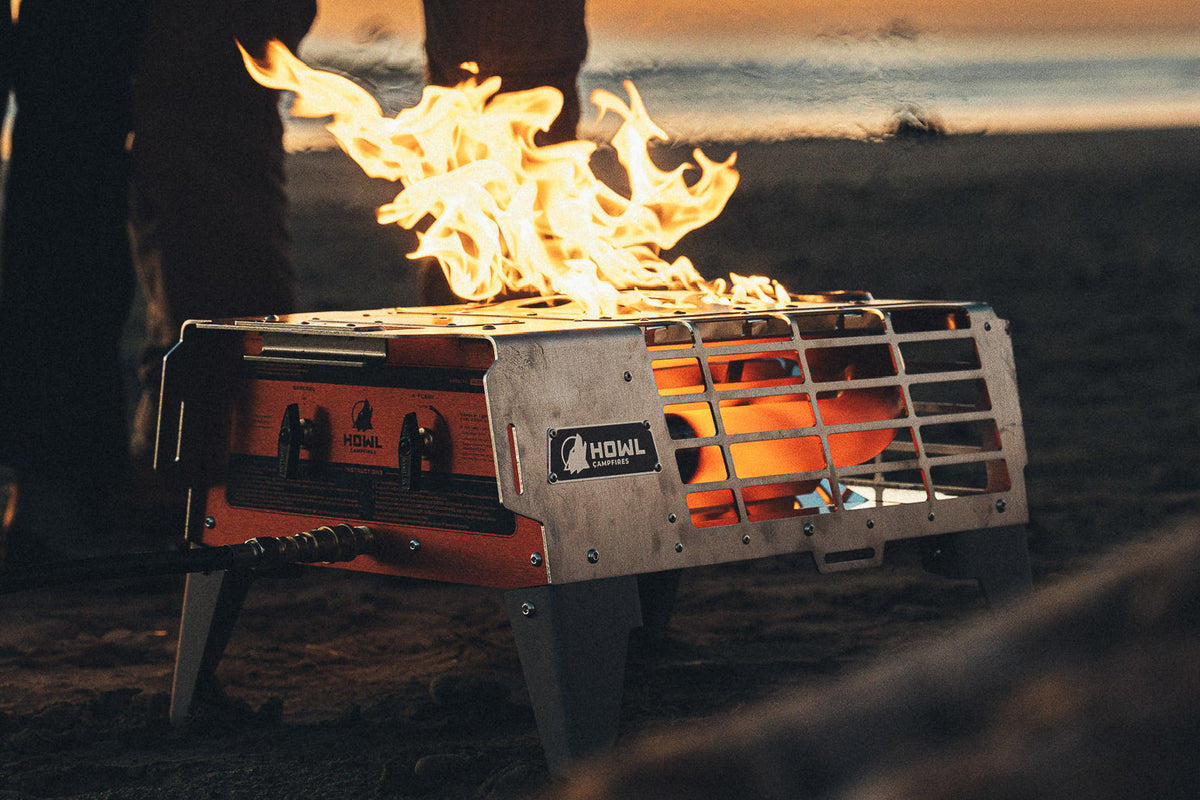
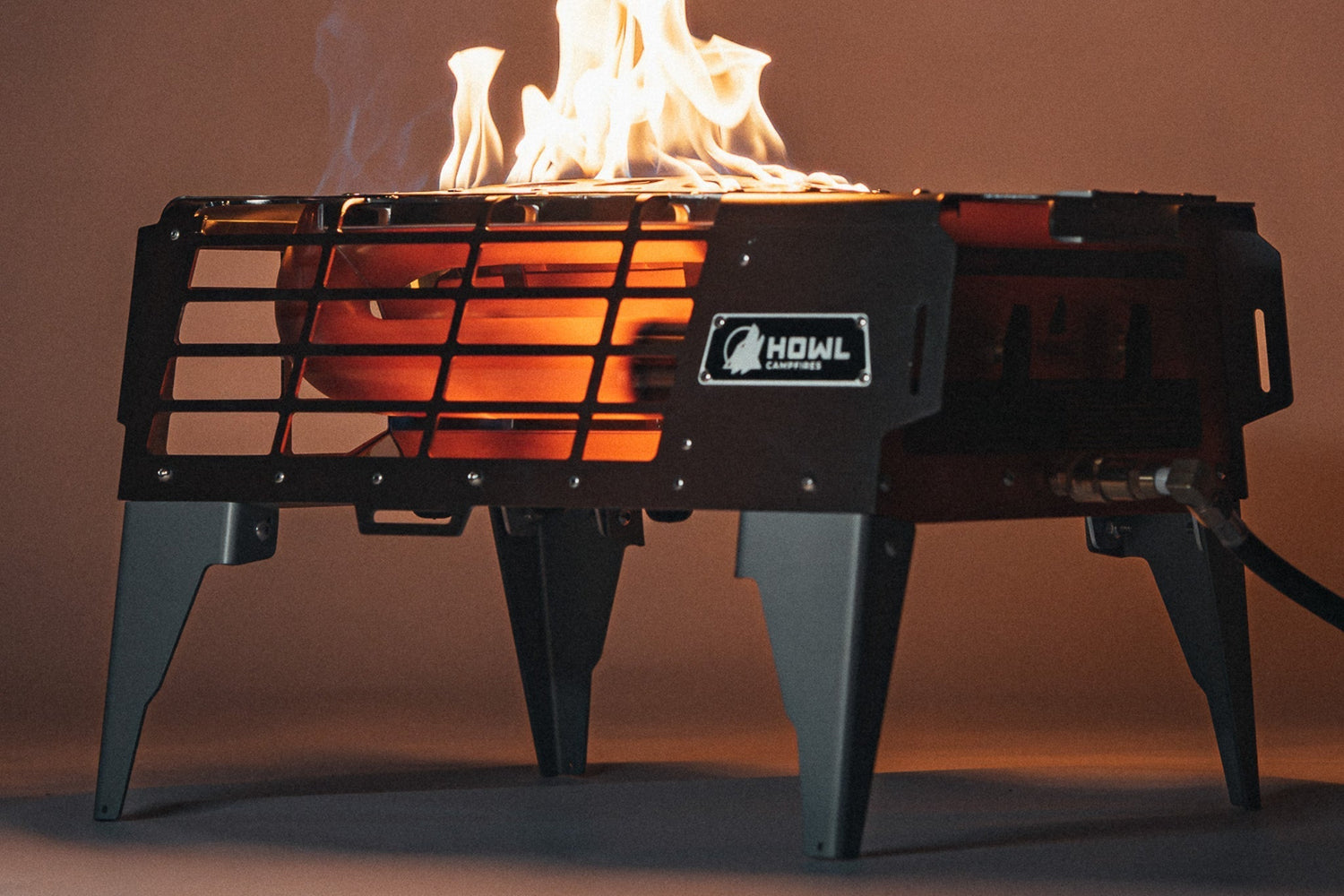
Instead of relying on flame alone, BarCoal uses controlled propane combustion to heat stainless steel tubes until they glow. Those glowing tubes become the coal bed.
Your eyes see the orange light.
Your body feels the infrared heat.
That is the whole point. BarCoal does not just make a propane fire look warm. It creates the kind of heat your body recognizes immediately: direct, outward, coal-like radiant warmth.
After a few minutes, it feels like sitting beside a scorching bed of wood coals, except there is no smoke, no sparks, no ash, no embers, and no half-burned log waiting to ruin the inside of your vehicle tomorrow morning.
No Wood. Still Coals.
This is the weird little engineering trick at the center of HOWL.
We burn propane, but we are chasing the heat of wood coals. Not the smell. Not the smoke. Not the charming little ember that lands on your jacket and melts a hole through something expensive.
The heat.
That took years of prototypes, testing, math, metal, and probably a few conversations where everyone involved should have gone home earlier. The problem sounds simple until you try to make propane act like something it is not supposed to be.
Propane wants to be a flame.
We wanted coals.
So we built BarCoal to create a glowing radiant heat source inside a propane campfire. The flame still matters. Firelight matters. Watching fire move matters. Nobody is trying to gather around a toaster with a good attitude.
But the part that makes people stay outside longer is the radiant heat.
Why Stainless Steel?
Once we knew the heat we wanted, we had to figure out what could survive it.
Not for one clean demo on a table. Not for a pretty prototype that works right before the investor meeting and then quietly dies in the parking lot. We needed a material that could get brutally hot, cool down, heat back up, ride in a truck, live outside, and do the same job again next weekend.
The answer was not some exotic metal from a moon shovel.
It was durable, manufacturable, American stainless steel.
That is what BarCoal tubes are made from. They heat until they glow, then send infrared heat outward like wood coals. The material matters because BarCoal has to survive the kind of heat it creates.
Pretty flames are easy.
Glowing metal that acts like wood coals is the hard part.