

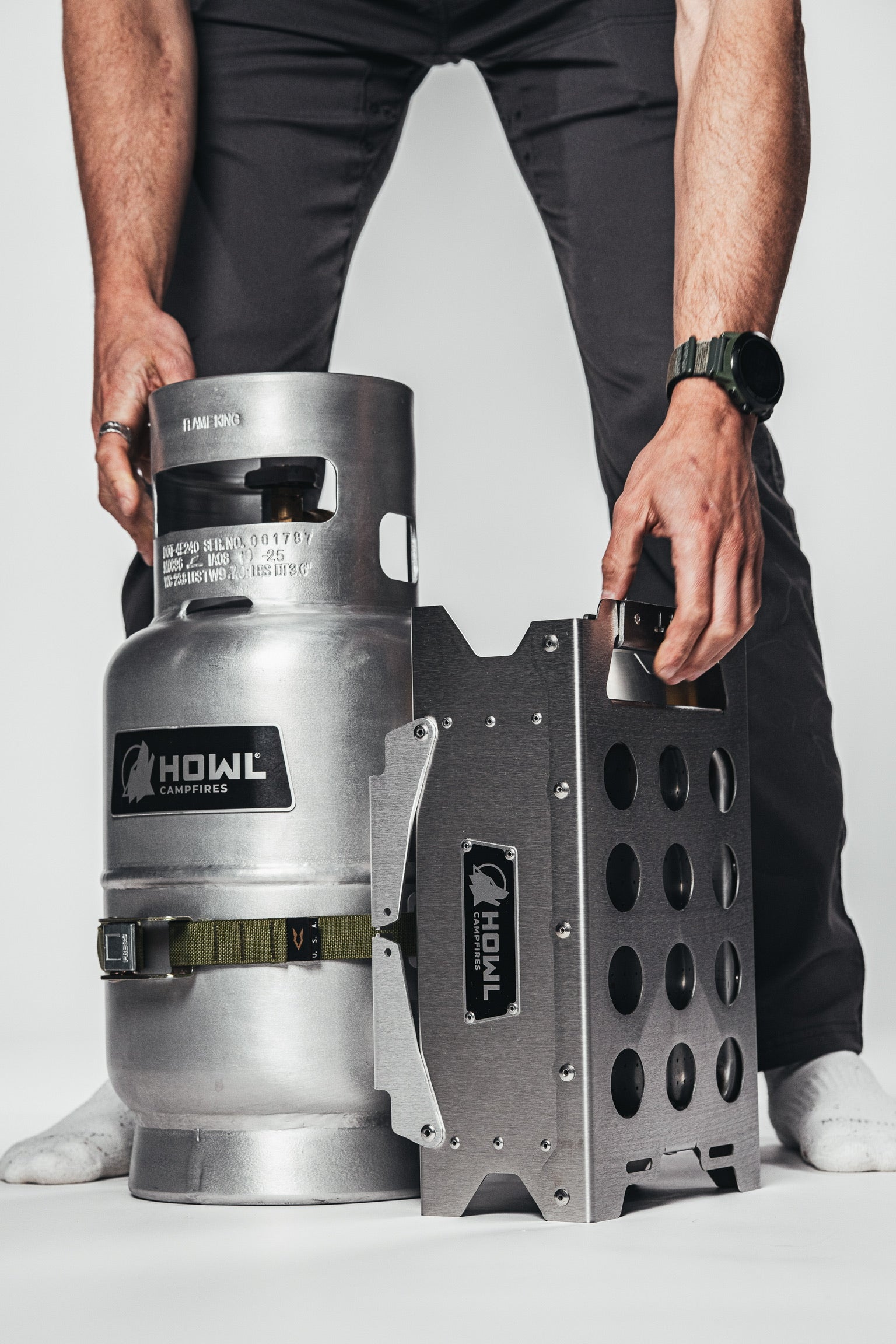
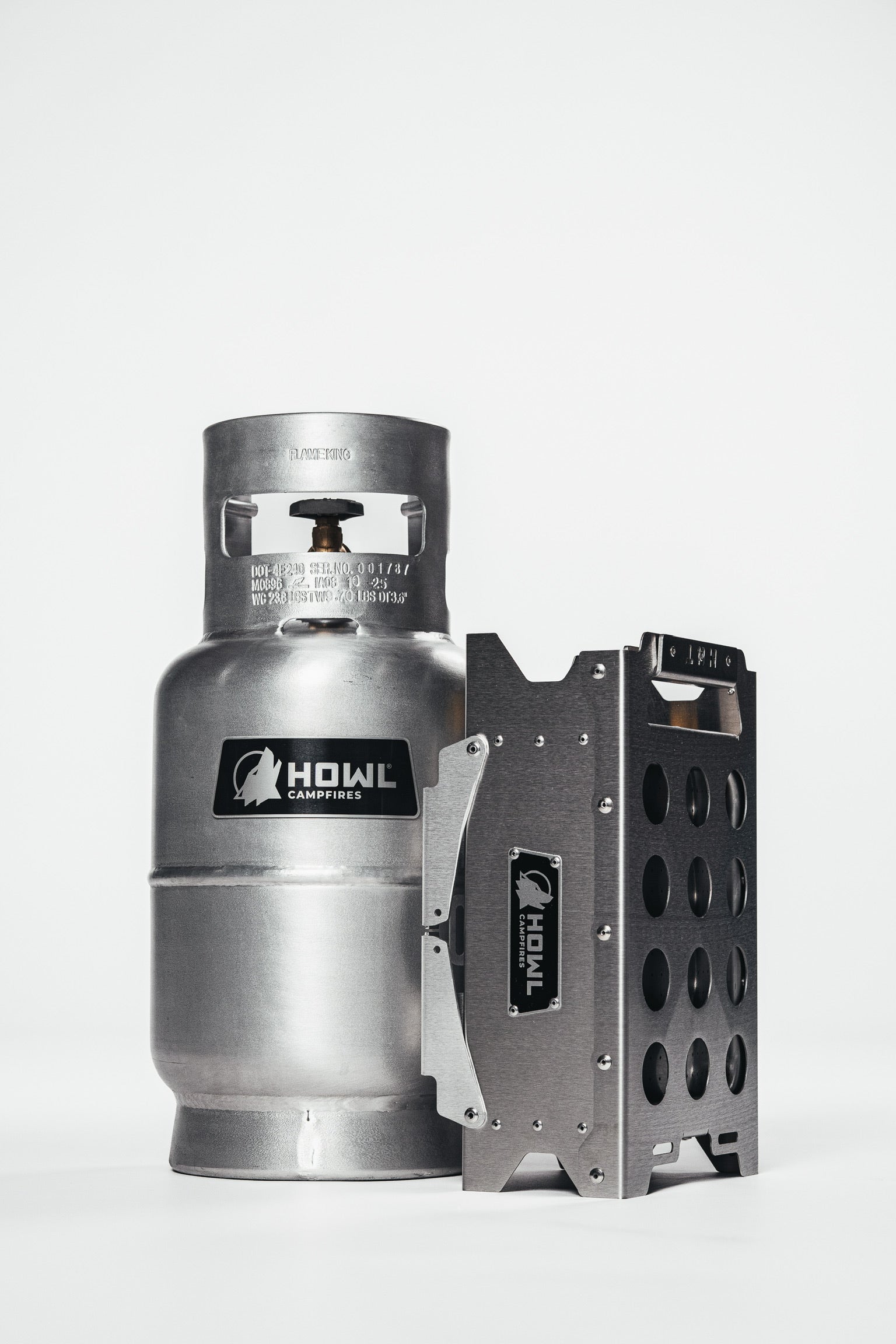
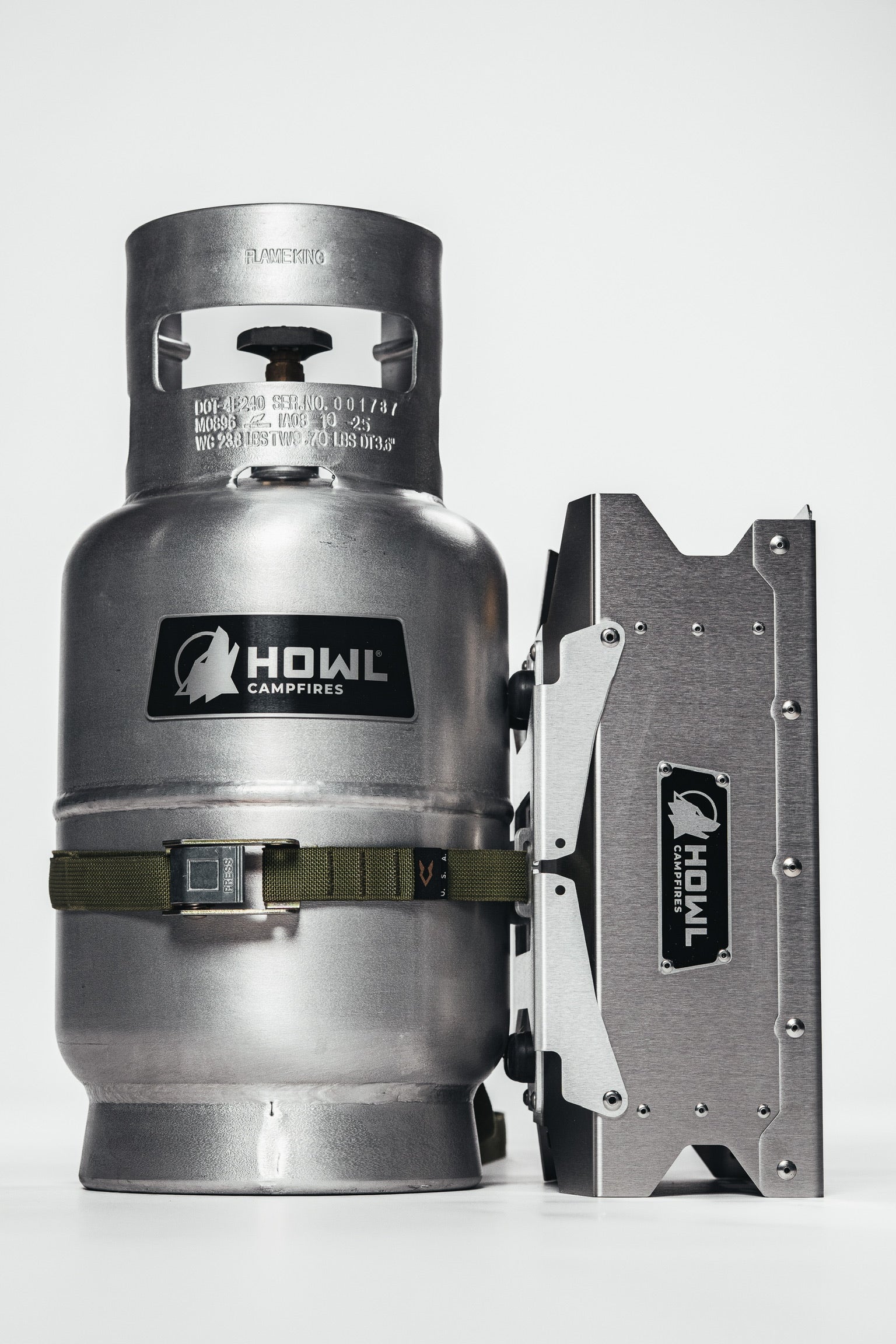
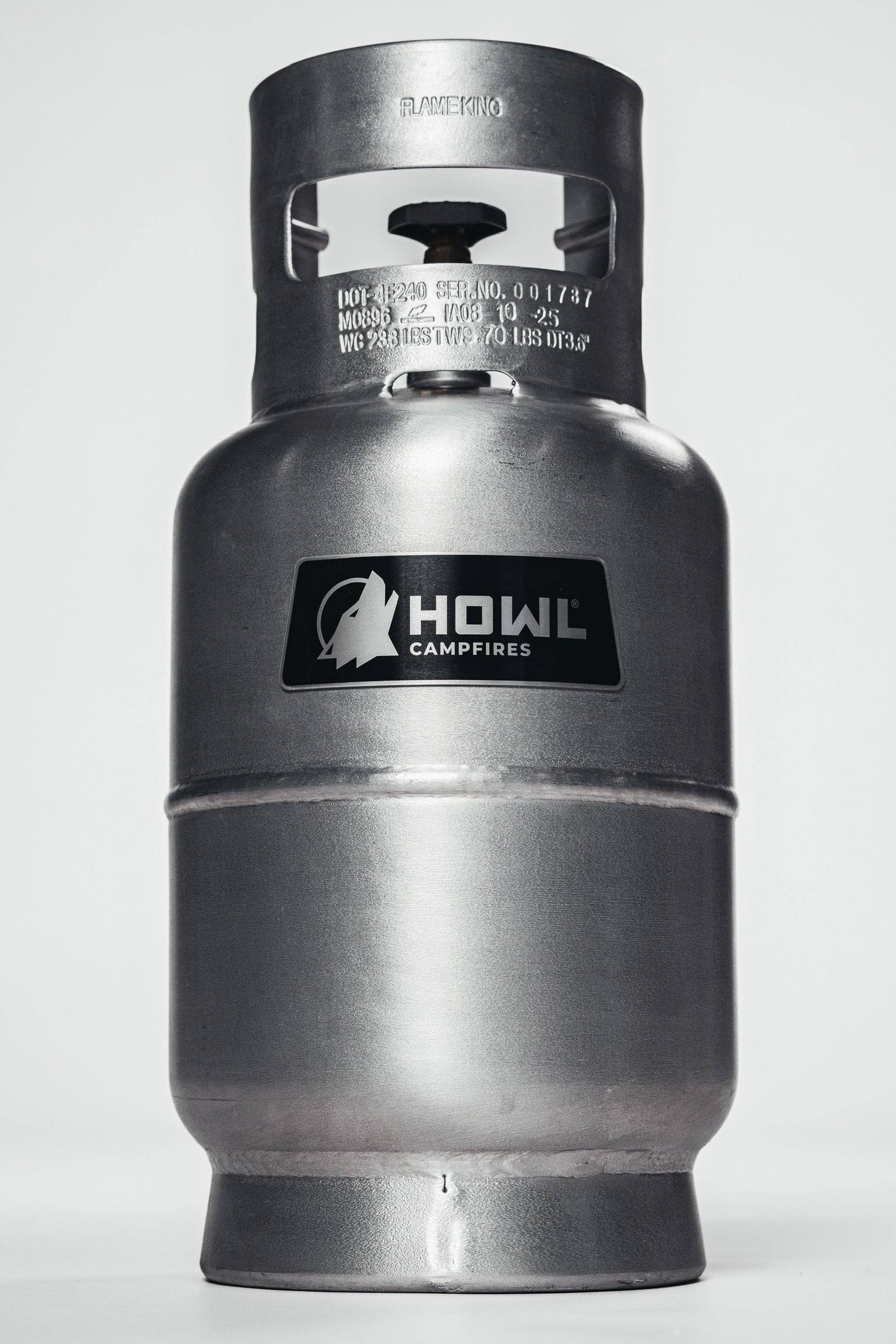
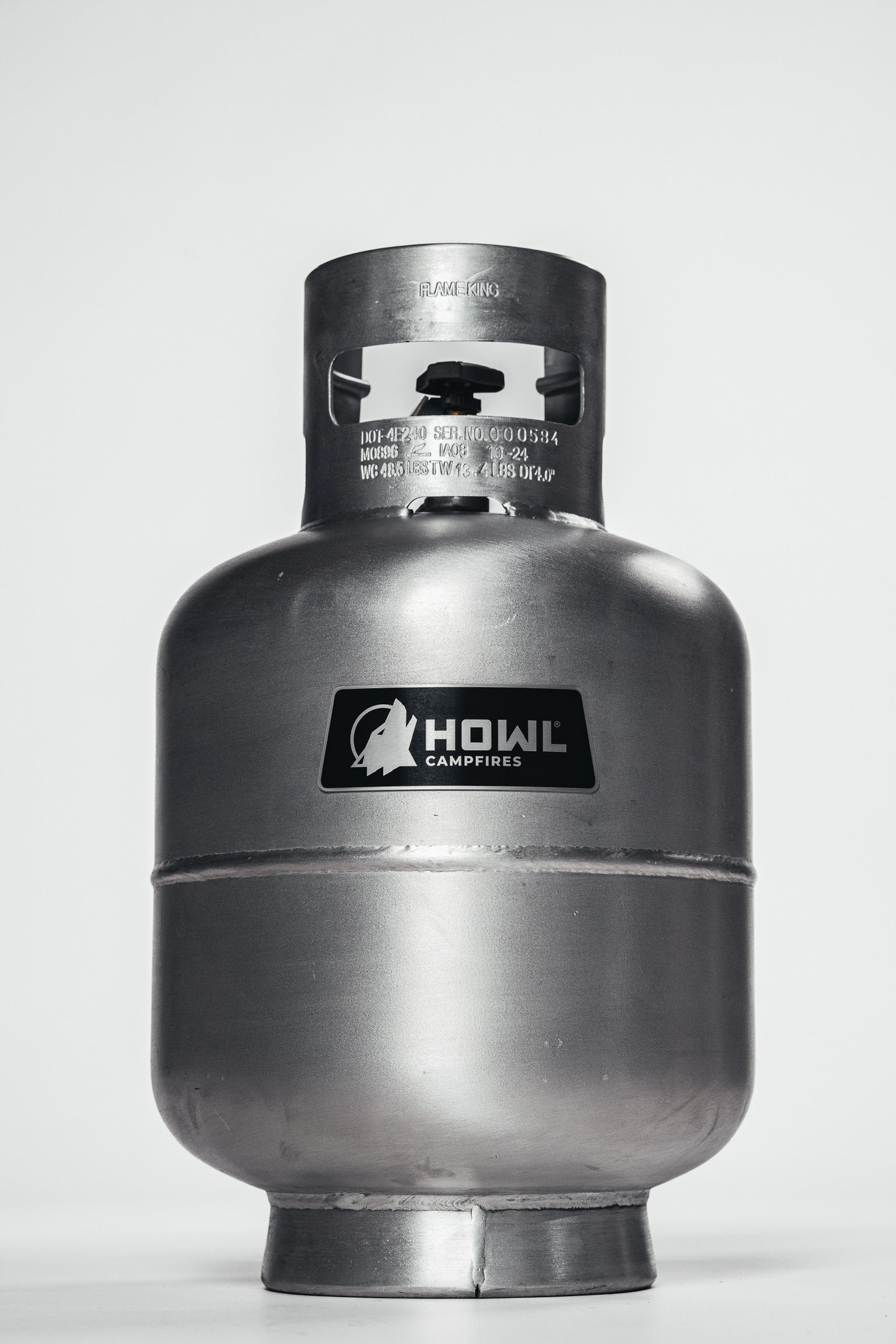
The HOWL R1.
All HOWL Campfires. Including the R1.
Compact carry + Extreme cold-weather performance
Max cold-weather performance + Fuel Reserve
True 10 lb propane (2.5 gal)
True 20 lb propane (5 gal)
9.6 lb
13 lb
9 in. diameter x 19.25 in. height
12 in. diameter x 21.25 in. height

WHY DO ALUMINUM TANKS WORK BETTER IN THE COLD?
TANK FREEZE
The snow's blowing sideways, your HOWL's ripping, but then several hours in, it happens. With plenty of fuel left in your tank, you've got sad, little flames.
That’s tank freeze, and here’s how it happens.
The propane in your tank is mostly liquid. Before it can feed your fire, it has to boil into vapor to build up pressure in the tank.
But that boiling takes heat, which comes from the tank walls. So as your tank get colder, the boiling slows, and the pressure drops.
No pressure means there's nothing to push the propane out of the tank. It just sits in there. That’s “tank freeze,” and it's why your flames die down in the cold.
THE FIX?
It's simple: keep your tank warm. But "warm" is relative. The boiling point of propane is -44ºF.
Even on a very cold night, your tank is still absorbing heat from the environment – from the air, the ground, and any radiant heat sources nearby.
That's why you should never put your tank inside a bag, or anything that insulates it. You’re just keeping heat from getting into your tank.
WHY DOES ALUMINUM BEAT STEEL?
Because steel is a slow sponge. Aluminum is a fast one.
Aluminum tanks transfer heat through the tank wall more efficiently. In cold conditions, that keeps your pressure up for longer – giving you stronger flames – before the cold-induced pressure sag sets in.
TANK FREEZE
The snow's blowing sideways, your HOWL's ripping, but then several hours in, it happens. With plenty of fuel left in your tank, you've got sad, little flames.
That’s tank freeze, and here’s how it happens.
The propane in your tank is mostly liquid. Before it can feed your fire, it has to boil into vapor to build up pressure in the tank.
But that boiling takes heat, which comes from the tank walls. So as your tank get colder, the boiling slows, and the pressure drops.
No pressure means there's nothing to push the propane out of the tank. It just sits in there. That’s “tank freeze,” and it's why your flames die down in the cold.
THE FIX?
It's simple: keep your tank warm. But "warm" is relative. The boiling point of propane is -44ºF.
Even on a very cold night, your tank is still absorbing heat from the environment – from the air, the ground, and any radiant heat sources nearby.
That's why you should never put your tank inside a bag, or anything that insulates it. You’re just keeping heat from getting into your tank.
WHY DOES ALUMINUM BEAT STEEL?
Because steel is a slow sponge. Aluminum is a fast one.
Aluminum tanks transfer heat through the tank wall more efficiently. In cold conditions, that keeps your pressure up for longer – giving you stronger flames – before the cold-induced pressure sag sets in.