



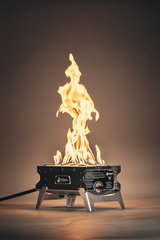
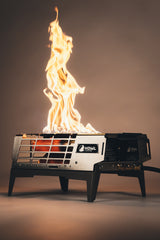
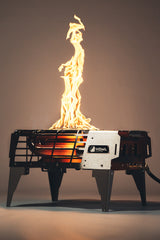
 World's most portable campfire
HOWL R1
$374
45°F rated · Warm-season
Small propane fire pit
45°F
Warm-season · Size of a shoeboxShoebox size
UL certified
•Free shipping over $500Built for burn bans. Check the regs
Free shipping over $500
(720) 336-4622CallHow it works
Burning questions

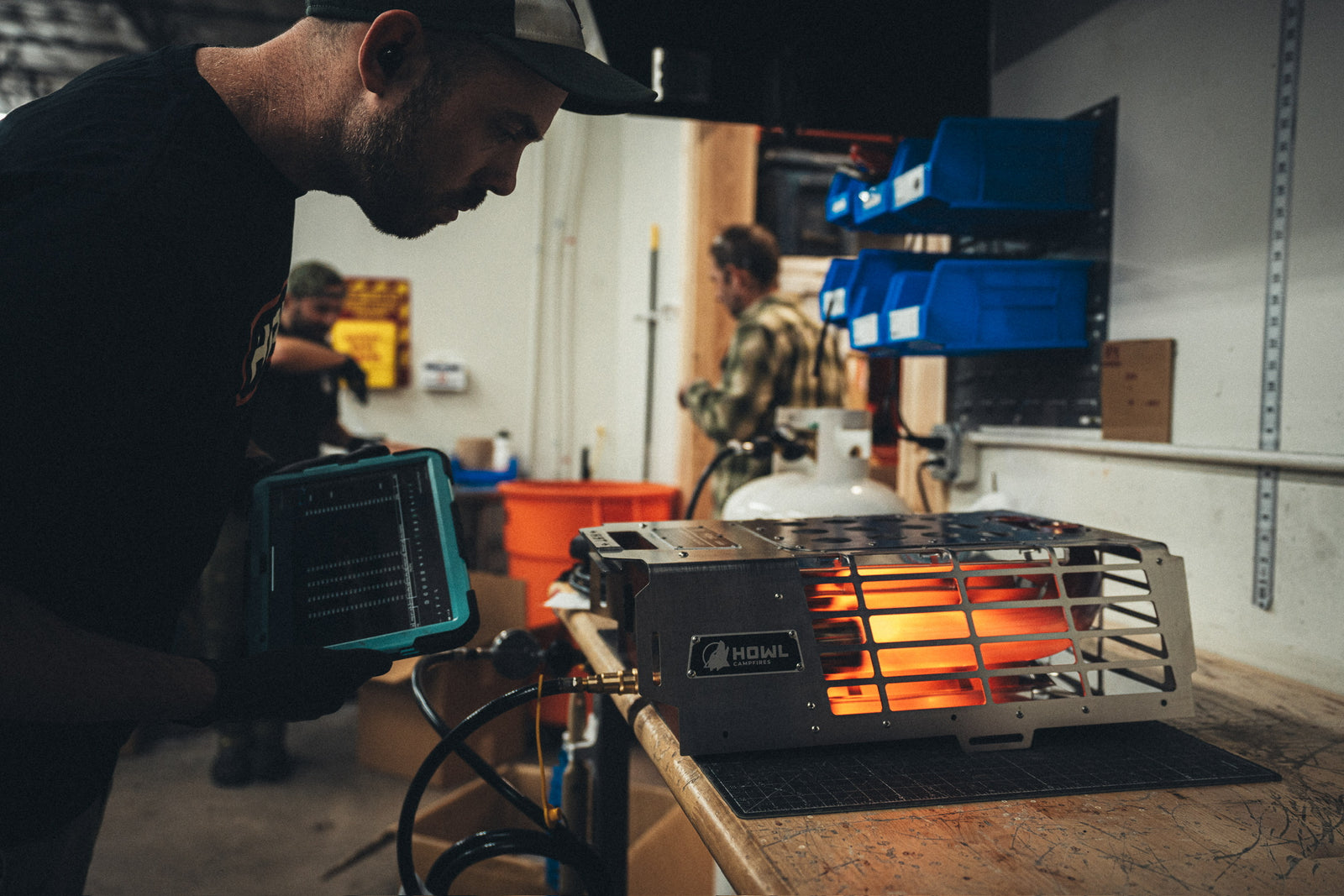
BarCoal® Technology
For decades, propane fire pits have made pretty flames and almost zero heat. We thought that was BS. So we built one that makes coals.
We took the industrial radiant heater down off the ceiling, shrank it, made it analog, and set it on the forest floor. A jet of propane pulls in the air, the fire rips through the tube where weather can’t touch it, and the steel glows, throwing heat like a bed of wood coals.
A FLIR camera doesn’t see firelight. It doesn’t see what tricks your eyes. Instead, it sees what your skin feels: infrared heat.
Point one at the flames of an ammo can fire pit and it tops out at 578°F. Point it at a HOWL’s BarCoal® tubes: 1,328°F.
Same propane.
Wildly different fire.

Here’s the problem with traditional propane fire pits: they only make flames. Flames make light and hot air. When you’re outside, hot air rises up into the sky and blows away. That’s why you never really feel warm next to one.
The heat you feel from a wood fire comes from the coals. Coals shoot out infrared rays that travel in straight lines – no matter the wind, rain or snow – until they crash into your body. The water in your cells soaks up infrared like crazy. Since most of you is water, coals are the best source of soul-warming heat.
A HOWL makes both. The A-Flame® makes firelight. The BarCoal makes coal heat.


How hot are we talking? Hot enough to steam freezing-cold creek water right out of your Carhartts. No other propane fire can do that.
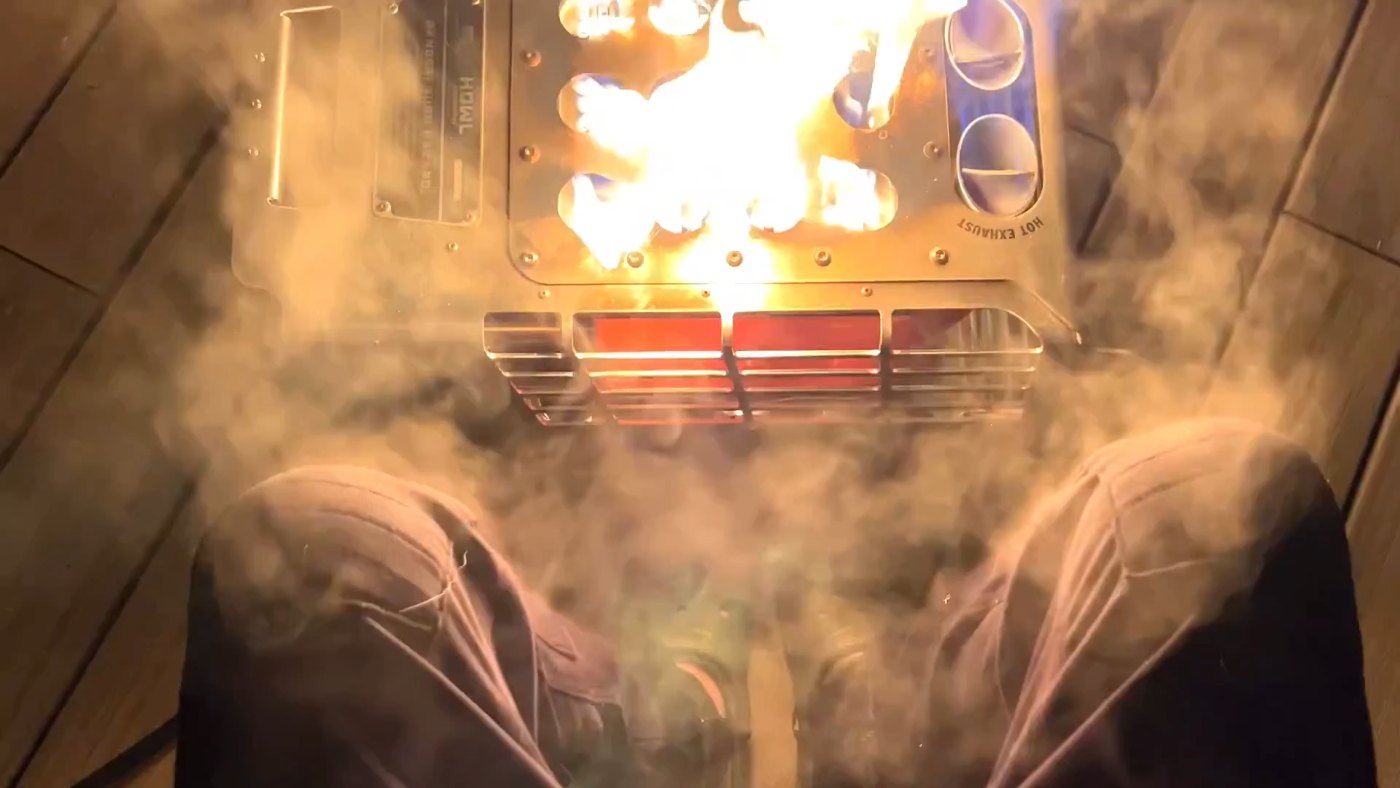
Hot air floats away.
Infrared stacks up until you back away, or turn to toast your other side.
Fire needs air to burn. Getting enough air is the whole game.
Traditional propane fire pits add the air way too late. First they light the gas. Then they rely on the air around them to feed the flames. Wind, altitude and weather mess with that air constantly. Whenever they do, the flames starve and cool down.
BarCoal flips it around.
When the air changes, the mix goes sideways.
The fuel is the constant, so the mix stays dialed.
A high-pressure jet shoots propane through a pinhole at nearly the speed of sound, straight into a venturi.
Like a powerful fan, the jet drags in every bit of air the fire will need. But there’s no blades, no motor, no battery, no plug. This system is completely analog, just like a wood fire.
Because the fuel is the constant, the mix stays dialed: about 24 molecules of atmospheric air for every molecule of propane. The air and fuel mix accelerates through the venturi into a stack of metal mesh, each layer turned a few degrees from the last, creating a homogenous mixture.
If you get the ratio and intermixing exactly right, you can get propane to burn right up to its theoretical temperature limit. We’ve measured roughly 3,560°F inside the tube.
Engineers call this a 100% primary air combustion system: all the air is in before the combustion ignites. That’s what allows BarCoal’s entire burn to stay sealed inside a steel tube where the wind, weather, and even altitude can’t touch it.
We tested it in 120 mph winds and it kept right on burning. It can likely handle more; 120 mph was just the limit of the testing equipment.
The wind can’t steal air from a fire that’s already got what it needs.

Now here’s where it gets tricky. Inside the tube, the fire’s only done half its job. Those ultra-hot gases want to rush straight down the middle and out the end, taking all their heat with them.
So we put a twist in their way, literally. Twisted-tape turbulators spin the gases and throw them against the tube walls. The steel soaks up the heat inside until it glows on the outside: a blistering 1,300°F+ surface temp on the R4’s TwinJet BarCoal tubes, and 1,100°F on the R3’s U-Tube BarCoal tube.
That orange glow is just the light you can see. The BarCoal tubes radiate much brighter in the invisible infrared spectrum. That’s what your body soaks up as thigh-melting, soul-warming heat.
And on the R4, EchoHeat™ reflector shields aim that heat right at you.
A jet, a corkscrew, and a steel tube. That’s the secret.

GroundCool™ technology
The BarCoal tubes broil everything in their path. But the ground just 7 inches below an R4 stays cool (5 inches below on the R3).
That means you can light a fire in places you always wished you could: your back deck, a blacktop parking lot, the roof of your rig, even the bow of your fishing boat.
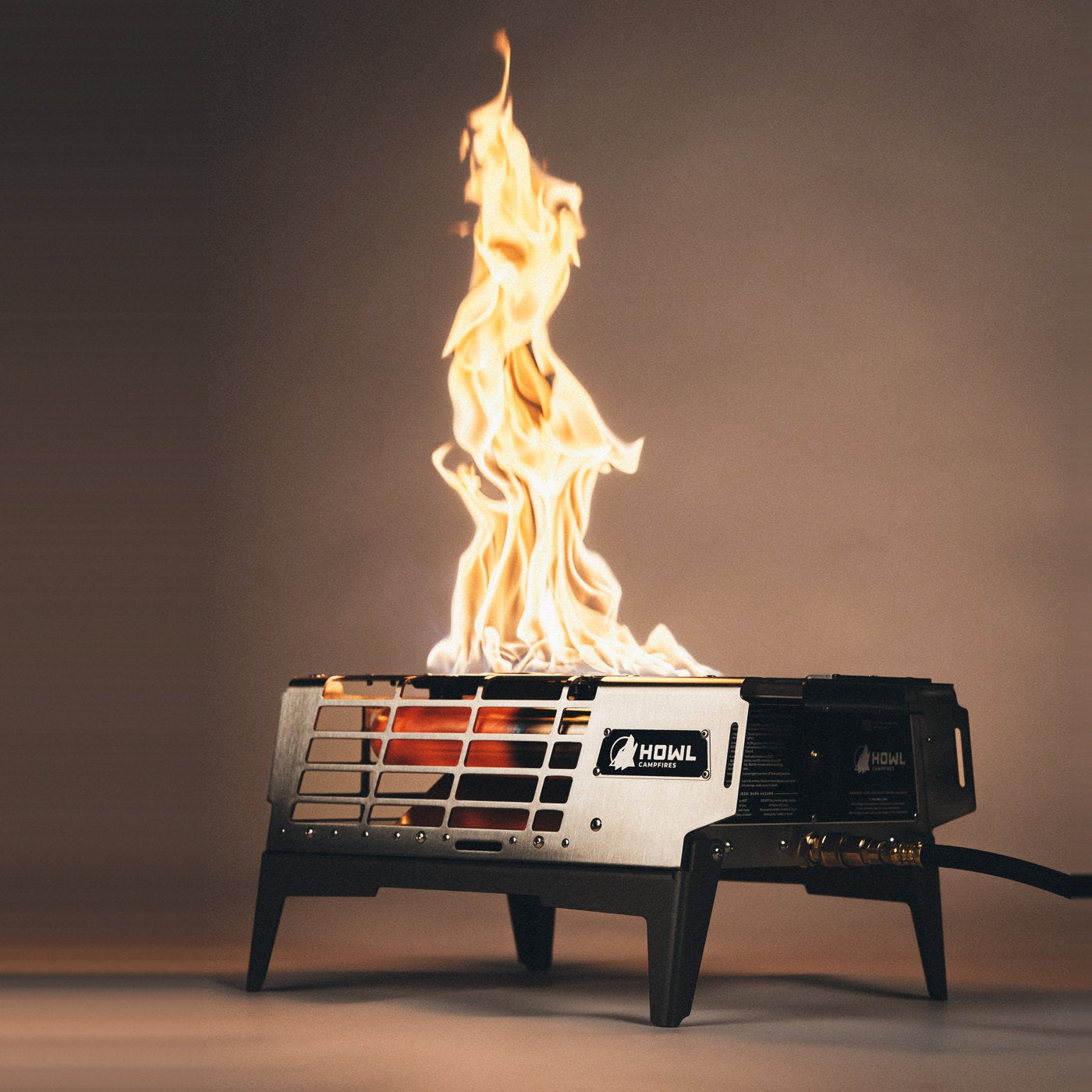
BTUs, explained
Flames-only fire pits can burn anywhere from 30,000 to 300,000 BTUs of fuel per hour. For practical purposes, a BTU is just an amount of fuel, like a gallon. The more BTUs a fire pit burns, the faster it drains your tank. That doesn’t mean you’ll be any warmer.
BarCoal turns the fuel it burns into heat you can actually feel. The R4’s BarCoals sip just 31,000 BTUs an hour. Run them by themselves, and you and your crew can rotisserie yourselves for 13 hours on a single 20 lb tank.
A better engine beats burning more fuel every day of the week.
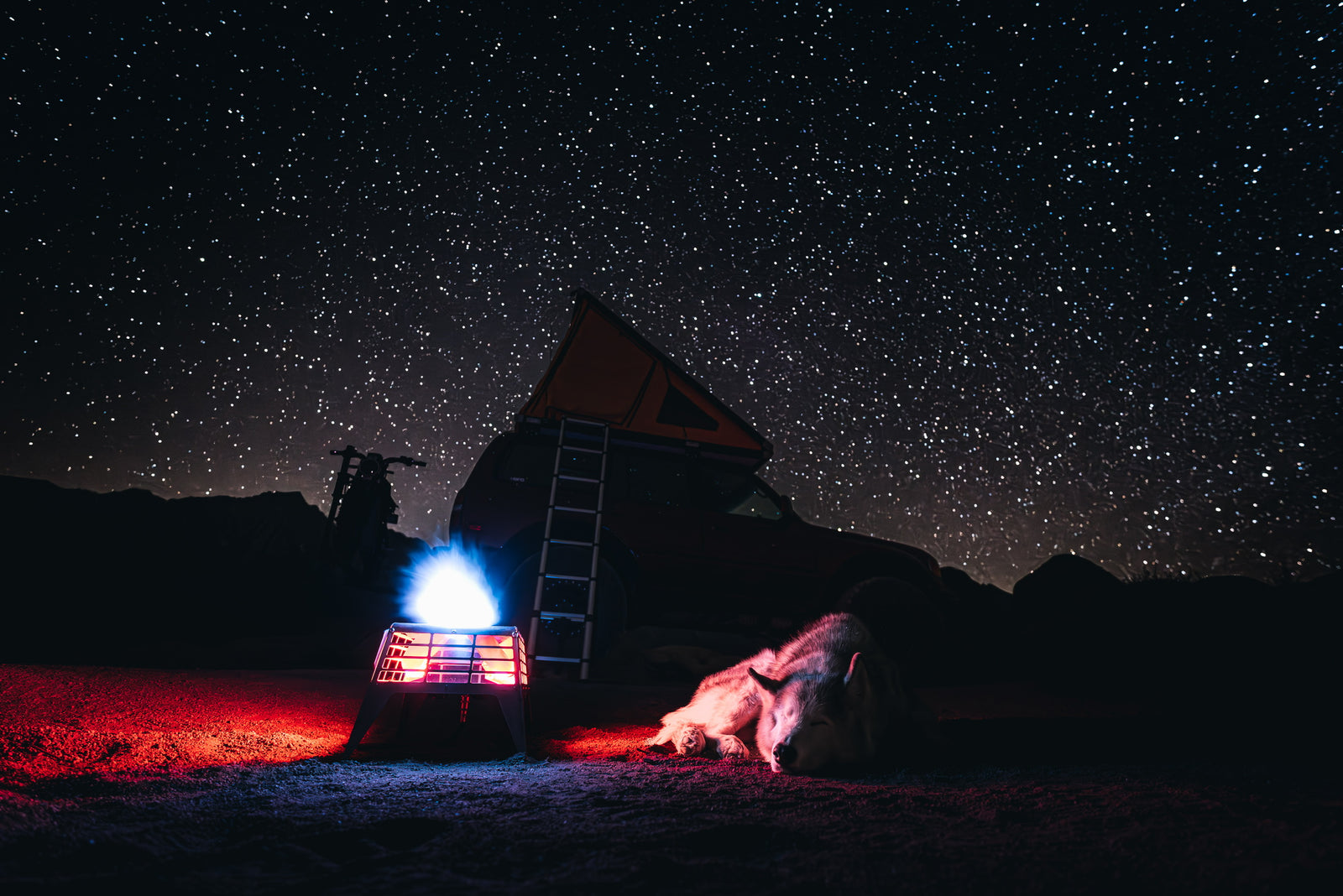
R4 only
When your camp tasks are done, kill the A-Flame and keep the BarCoal running. Suddenly the HOWL is like the end of a wood fire: the flames die, and you’re left with a scorching bed of coals. As your eyes adjust, the sky comes alive.
All three modes on the A-Flame® page →Aerospace grade
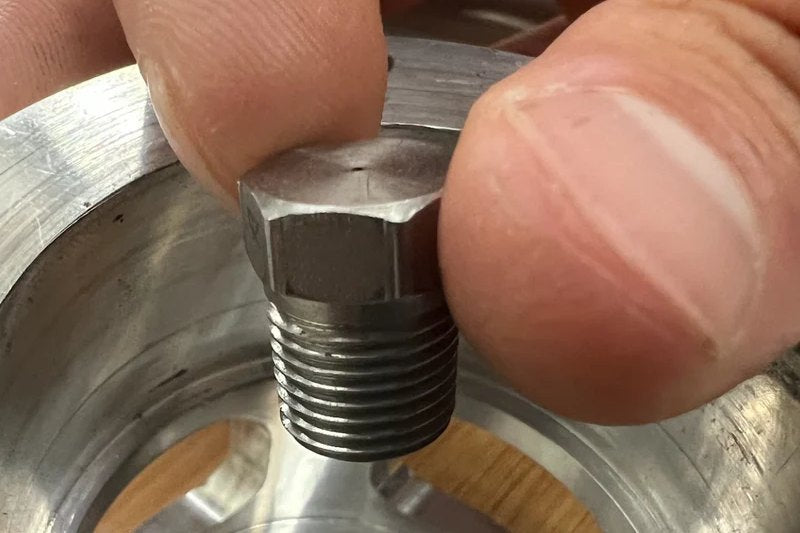
The heart of BarCoal is the Fuel Jet Orifice. It looks like a small, standard bolt from the hardware store. But if any interior surface of that jet were out of spec by even a microscopic amount, you’d end up with BarCoal tubes that don’t get hot enough to glow. Its threads have to seal without a gasket, and the only way to make them leak-proof is a Swiss Screw CNC machine, the same machine Rolex uses to make watch gears.
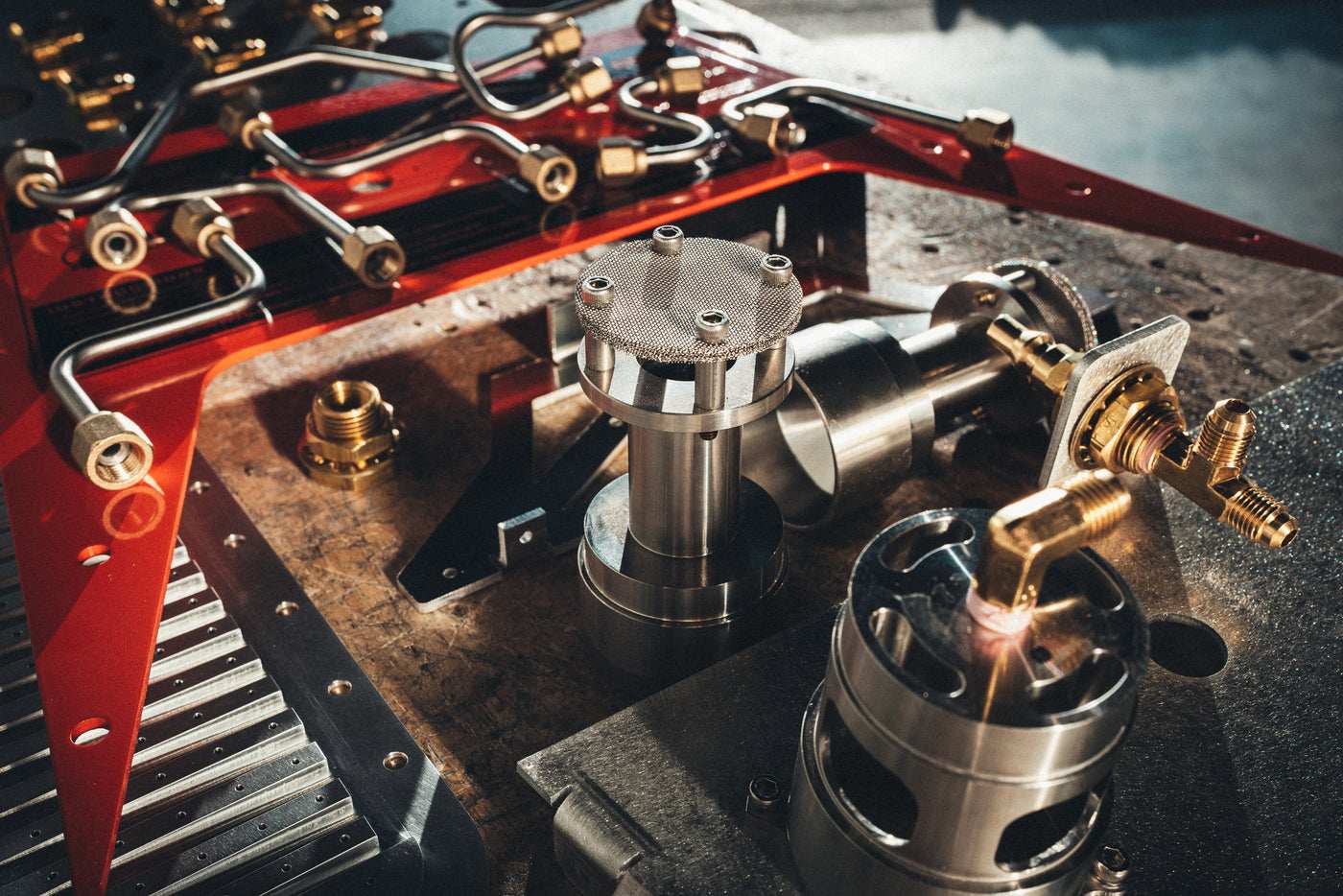
It’s just one of the aerospace-grade parts we make in a factory that builds parts for the International Space Station.
Hand-built in Arvada, Colorado
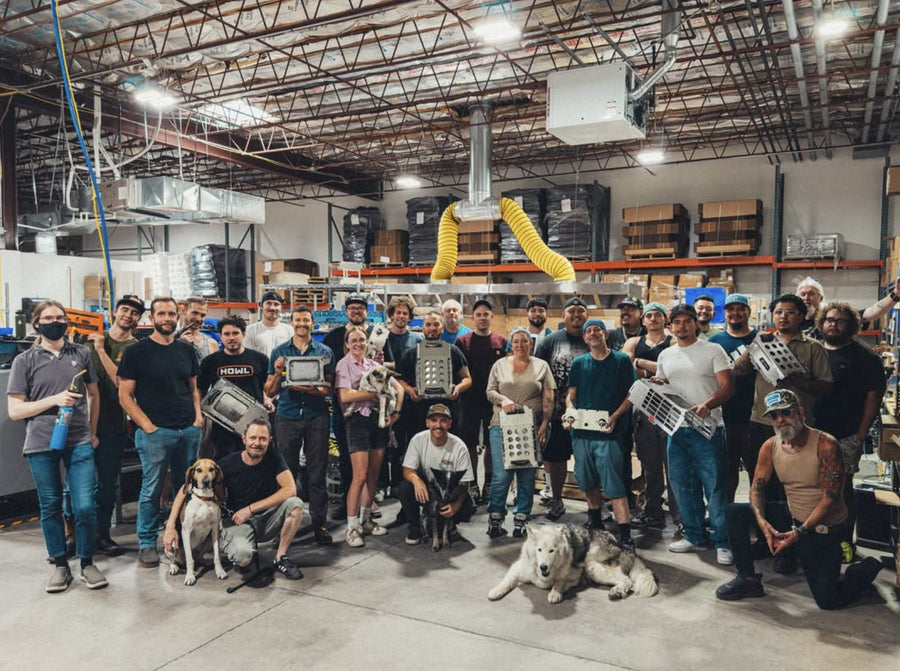
Every HOWL is cut, bent, welded, assembled and tested by hand at our factory in Arvada, Colorado. We test every part, every gas line connection, every rivet and every weld.
Then we test burn every finished HOWL. If an R4’s BarCoal tubes read above 1,300°F (1,100°F on an R3), it passes. If not, it doesn’t ship.
You’ll never see most of these parts when you use your HOWL. But you’ll definitely feel their heat.
Why go to all this trouble? Here’s the story →
Find your HOWL
HOWLs are built for Stage I and II burn bans.* Find yours by your coldest camp nights.
Slide to your coldest night
World's most portable campfire
Small propane fire pit
45°F
Warm-season · Size of a shoeboxShoebox size
UL certified
 World's smallest radiant fire pit
Three-season propane fire pit
25°F
Three-season · Size of a case of beerCase of beer size
UL certified
 World's hottest propane fire pit
Four-season propane fire pit
0°F
Four-season · Size of a Pelican carry-onPelican carry-on size
UL and UL-C certified
*Under standard USFS and BLM fire restrictions. Always check local regs.