



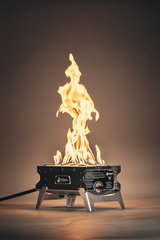
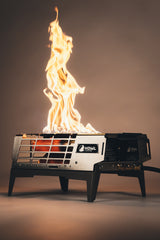
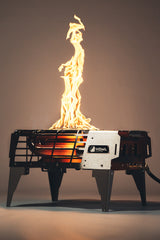
 World's most portable campfire
HOWL R1
$374
45°F rated · Warm-season
Small propane fire pit
45°F
Warm-season · Size of a shoeboxShoebox size
UL certified
•Free shipping over $500Built for burn bans. Check the regs
Free shipping over $500
(720) 336-4622CallHow it works
Burning questions
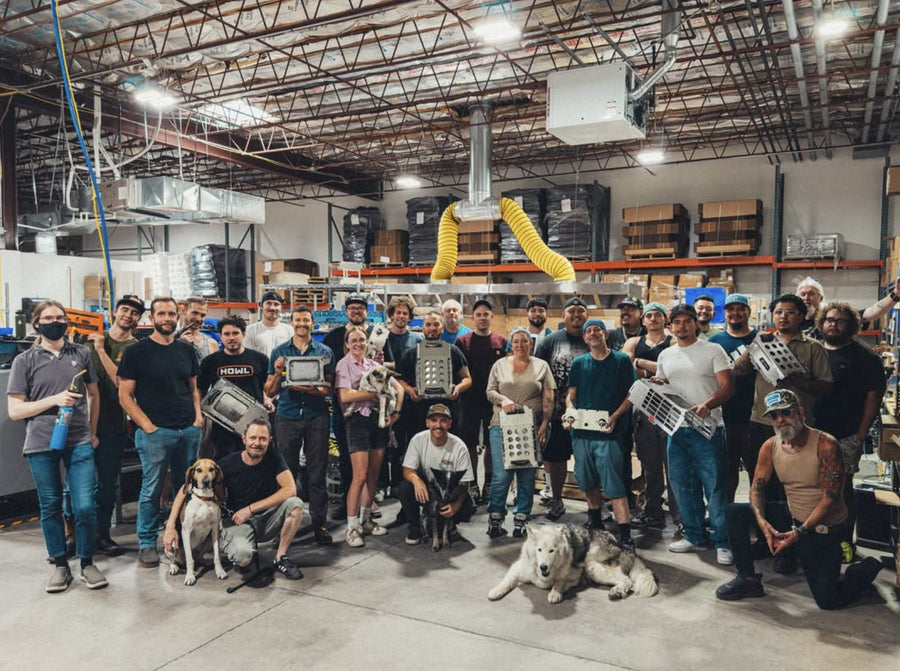

A-Flame® Technology
Most propane fire pits make a row of stubby flames that hide down in a box. But a campfire should look like a campfire.
The A-Flame® packs 160 tiny flames so close together that they merge into a single, tall, leaping flame – the same way wood flames do. Taller flames have more surface, so you get more light and more radiant heat from the same fuel. Then we took the walls away, so nothing blocks the heat.
Put an R4’s A-Flame next to an ammo can fire pit. The ammo can burns 32,000 BTUs of propane per hour and makes a 4-inch flame. The R4’s A-Flame burns 31,000 and makes a 24-inch flame.
BTUs are what you use.
Flames are what you get.
A BTU is an amount of fuel, like a gallon. BTUs, explained →

Most fire pit burners are just a gas pipe with holes punched in it, same as an old barbecue. A popular ammo can fire has 29 big holes spaced far apart. Each hole makes a short flame, kind of like a birthday candle. They add up to a cute line of candles in a decorative box. That’s not a campfire.
The A-Flame burner has 160 precision-machined micro-emitters, carefully placed. Each makes a tiny flame. Spaced correctly, they stop acting like 160 flames and start acting like one big one, stretching skyward like the flames of a wood fire. No extra fuel, just the laws of physics and fluid dynamics.


29 short flames make a birthday cake. 160 tiny ones make a campfire.
The heat you feel from a flame is radiant. A taller flame has more surface facing you, so the same fuel throws more light and more heat your way.
Most fire pits give you short flames, so less heat. And then what heat they do make, they throw it away on walls. That’s because radiant heat travels by line of sight, so while the walls of a box or a bowl protect the flame from wind, they also block the heat.
HOWL’s A-Flame tears down the walls, so there’s nothing standing between you and the heat.
If you can’t see the flame, you can’t feel it.
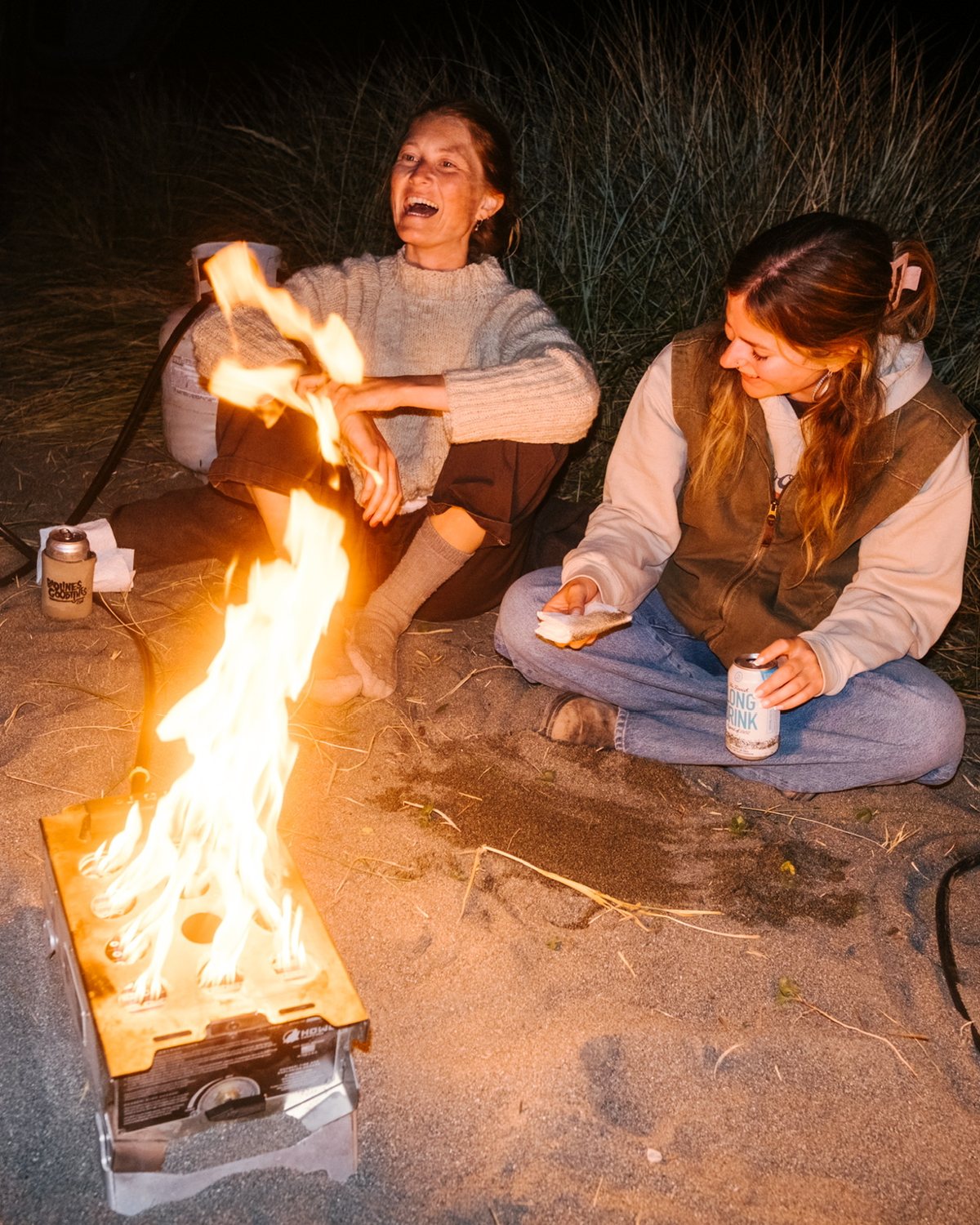
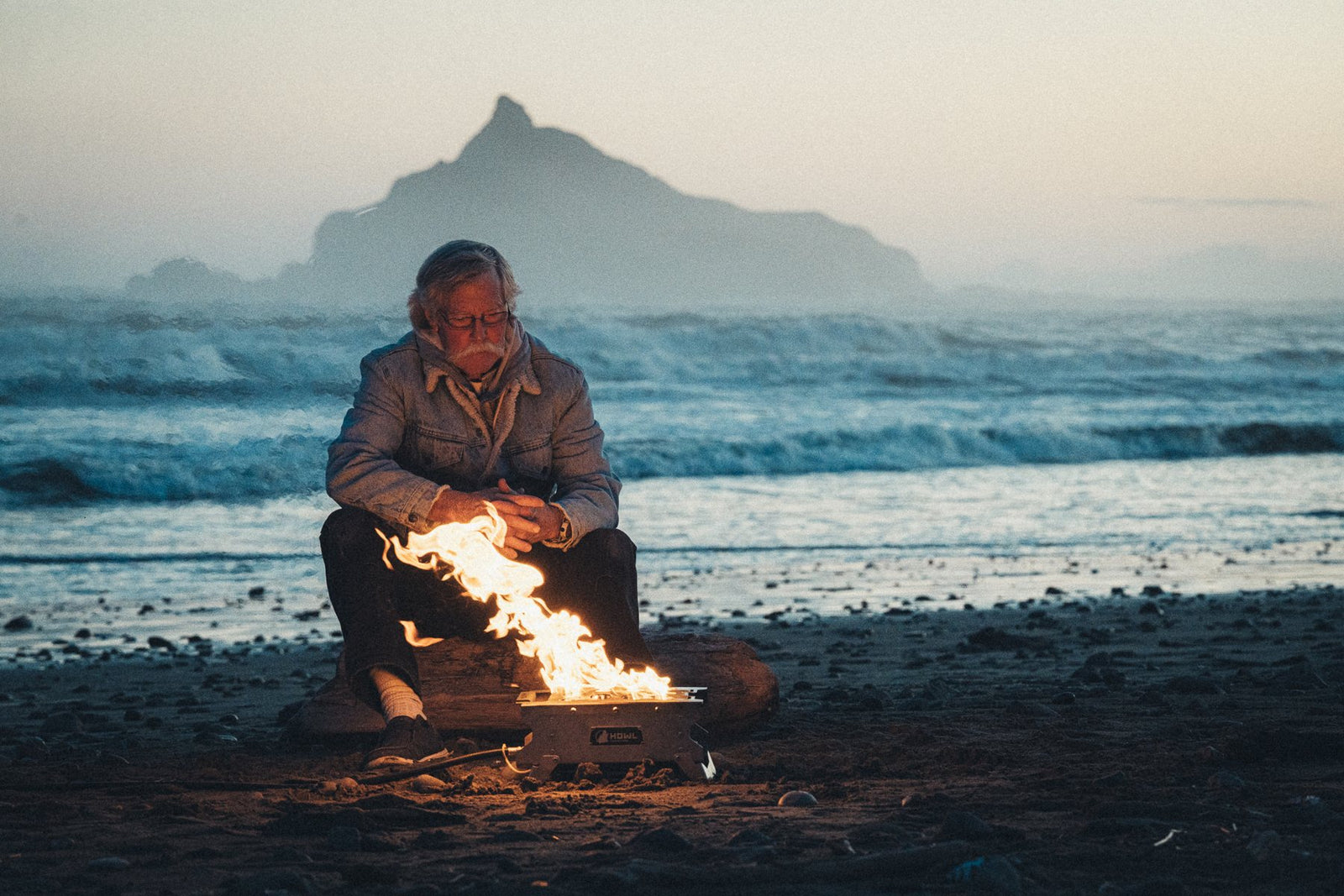
No walls used to mean no wind protection. But HOWL solved it with the horizontal FlexDome Windscreen. It sits just above the burner plate, domes up when it’s hot, and returns to flat when cold. Instead of trying to block the wind with tall vertical walls, it uses laminar separation to let the wind slide right over the top, while a pocket of air below stays largely undisturbed. That pocket gives the flame a secure place to live.
The A-Flame keeps burning in winds up to 60 mph. Above that, it can get blown out. But if a big gust snuffs the flame on an R3 or R4, it simply relights itself off the BarCoal®, which stays lit in 120 mph winds.
Rain and snow won’t end your night either. The A-Flame sheds water and keeps burning.
The wind passes over. The flame stays put.

R4 only
On the R4, the heat and flames have their own knobs. Run either or both for three different modes that map to your night at camp.
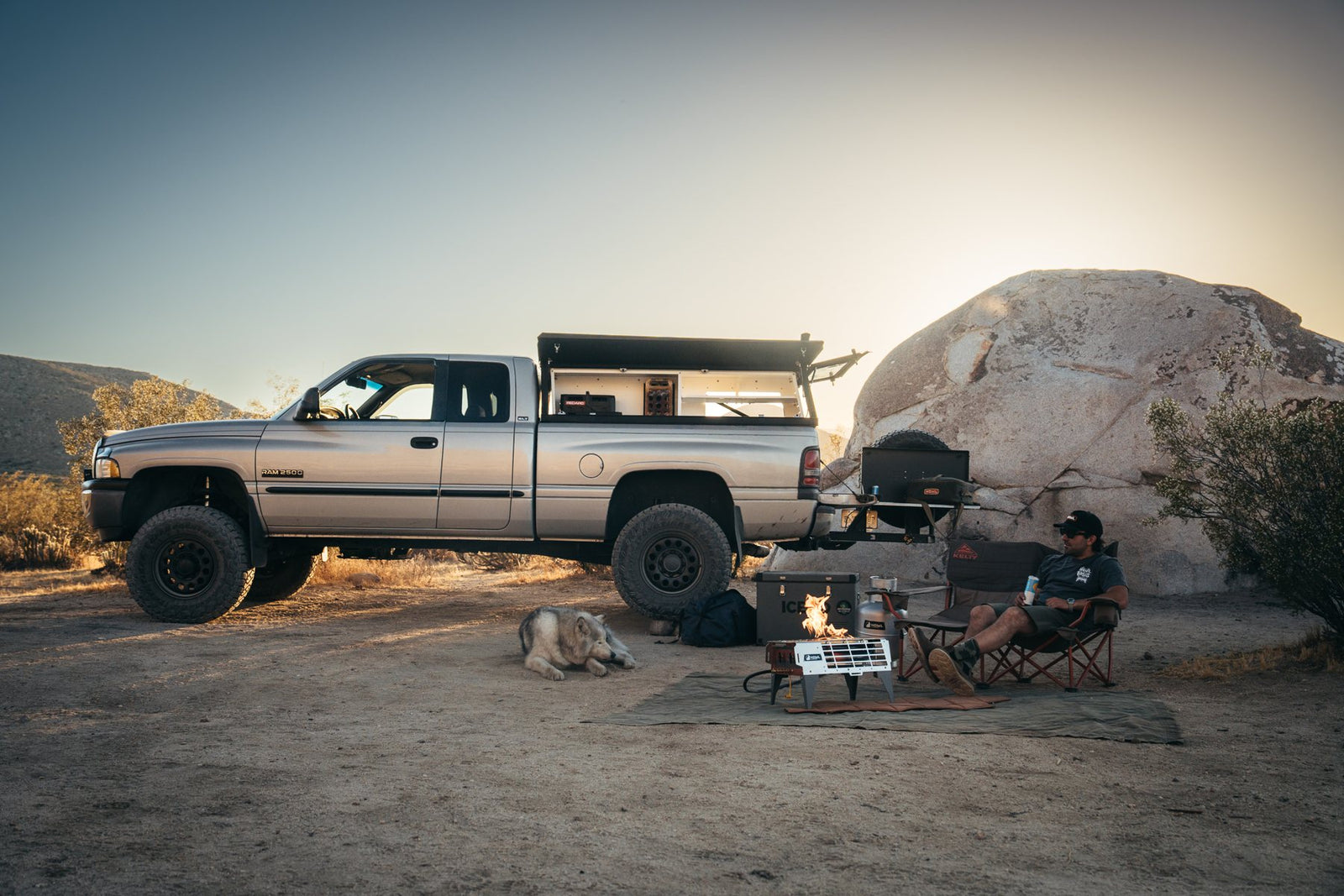
Run the A-Flame for light to cook and work on gear. It’s warm out, so leave the BarCoals off.
All firelight, no radiant coal heat.
About 13 hrs on a 20 lb tank.
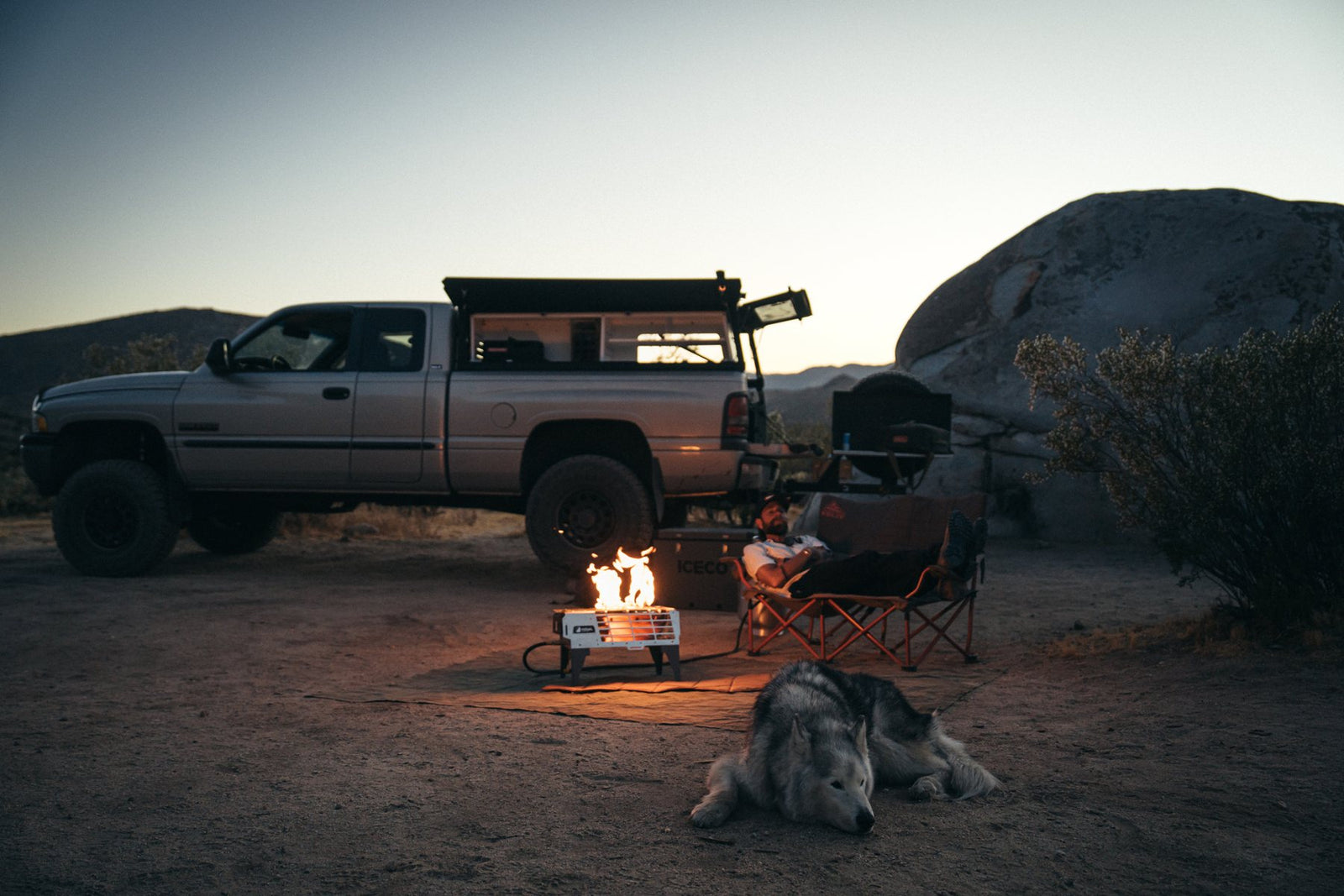
Turn on the BarCoals and start toasting your thighs.
All light, all heat.
About 6.5 hrs on a 20 lb tank.
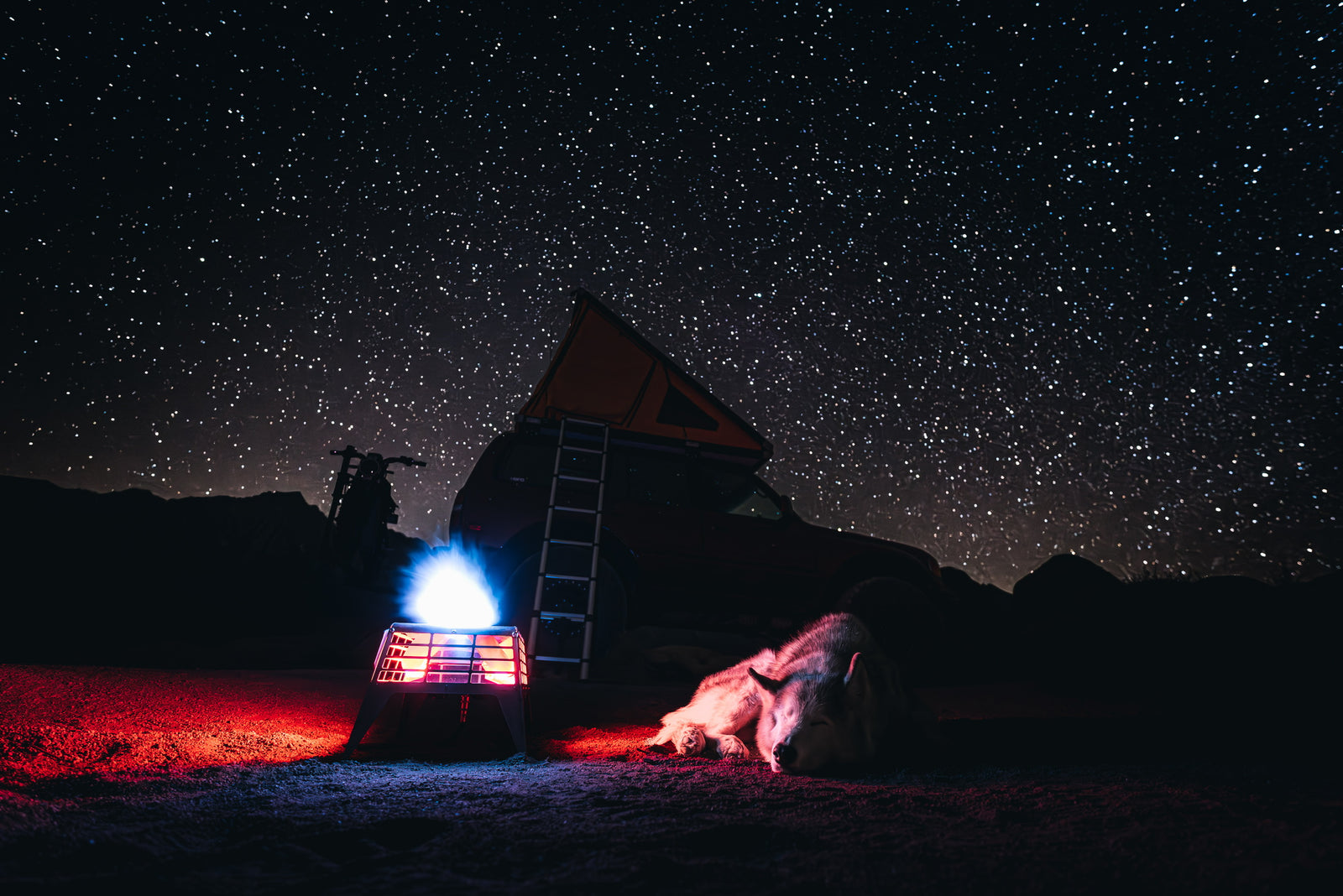
Kill the A-Flame and keep the BarCoals running like a scorching bed of coals. Your eyes adjust, and the sky comes alive.
All radiant heat, no firelight.
About 13 hrs on a 20 lb tank.
Stargazing Mode is R4 only. The R3 runs both burners off one knob, so it’s always in Campfire Mode. The R1 is all A-Flame.
Flame height
All three use the same idea: 160 micro-emitters and no walls. Here’s how tall each one burns, wide open.
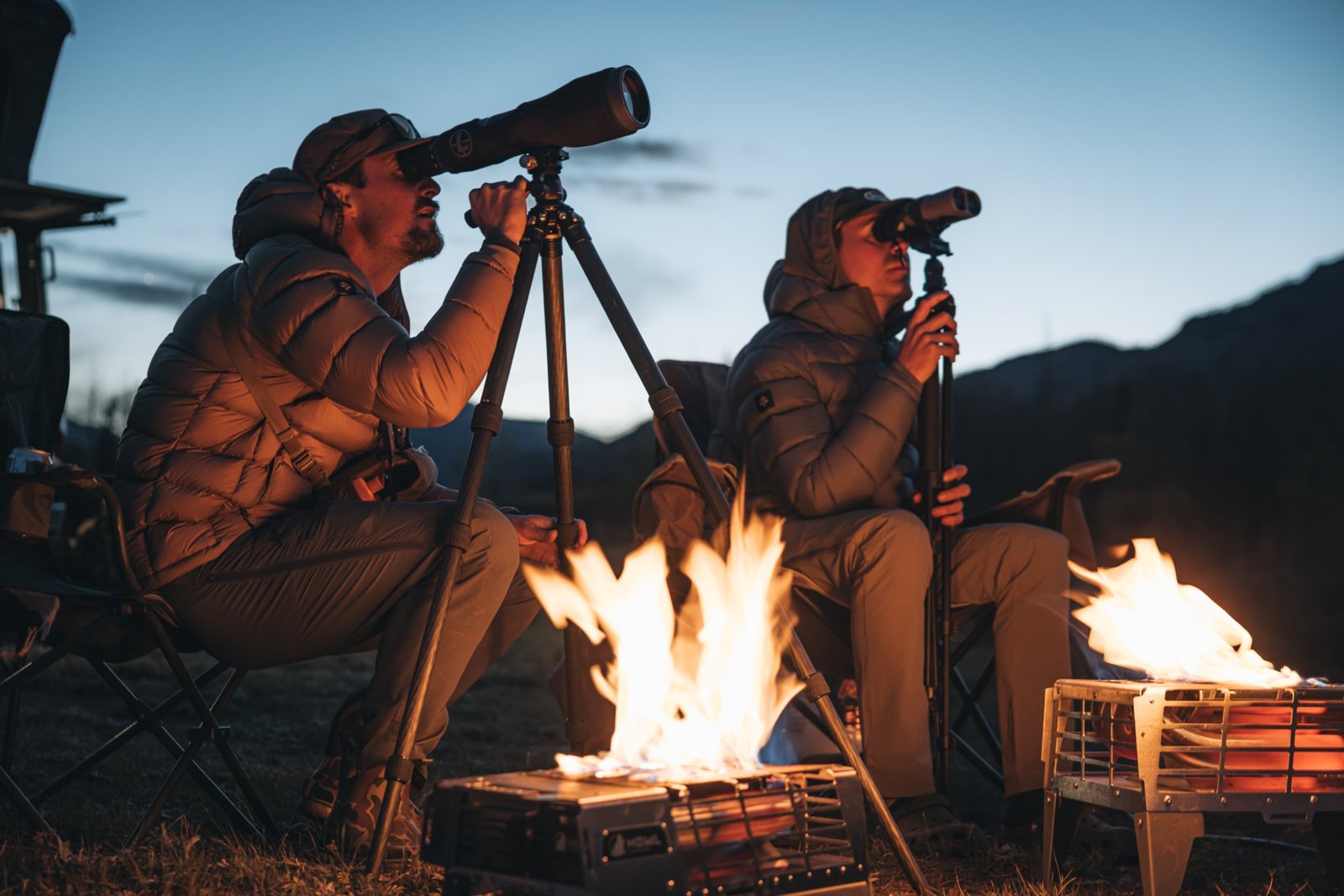
The only fire pit that makes 32-inch flames for 8 hours on a 20 lb tank. All flame, no BarCoal.
See the R1 →Big flame, plus a U-Tube BarCoal® for heat. One knob runs both: about 6 hours on a 20 lb tank.
See the R3 →Big flame, plus TwinJet BarCoal® for heat. Just the flame runs 13 hours on a 20 lb tank.
See the R4 →The flame’s half the story. Here’s the heat: BarCoal® Technology →
Every HOWL has an A-Flame® burner
Slide to your coldest night
World's most portable campfire
Small propane fire pit
45°F
Warm-season · Size of a shoeboxShoebox size
UL certified
 World's smallest radiant fire pit
Three-season propane fire pit
25°F
Three-season · Size of a case of beerCase of beer size
UL certified
 World's hottest propane fire pit
Four-season propane fire pit
0°F
Four-season · Size of a Pelican carry-onPelican carry-on size
UL and UL-C certified