
COAL-BED HEAT. WITHOUT THE WAIT.
BarCoal tubes crank out so much infrared heat that they’ll boil the freezing creek water right out of your Carhartts.
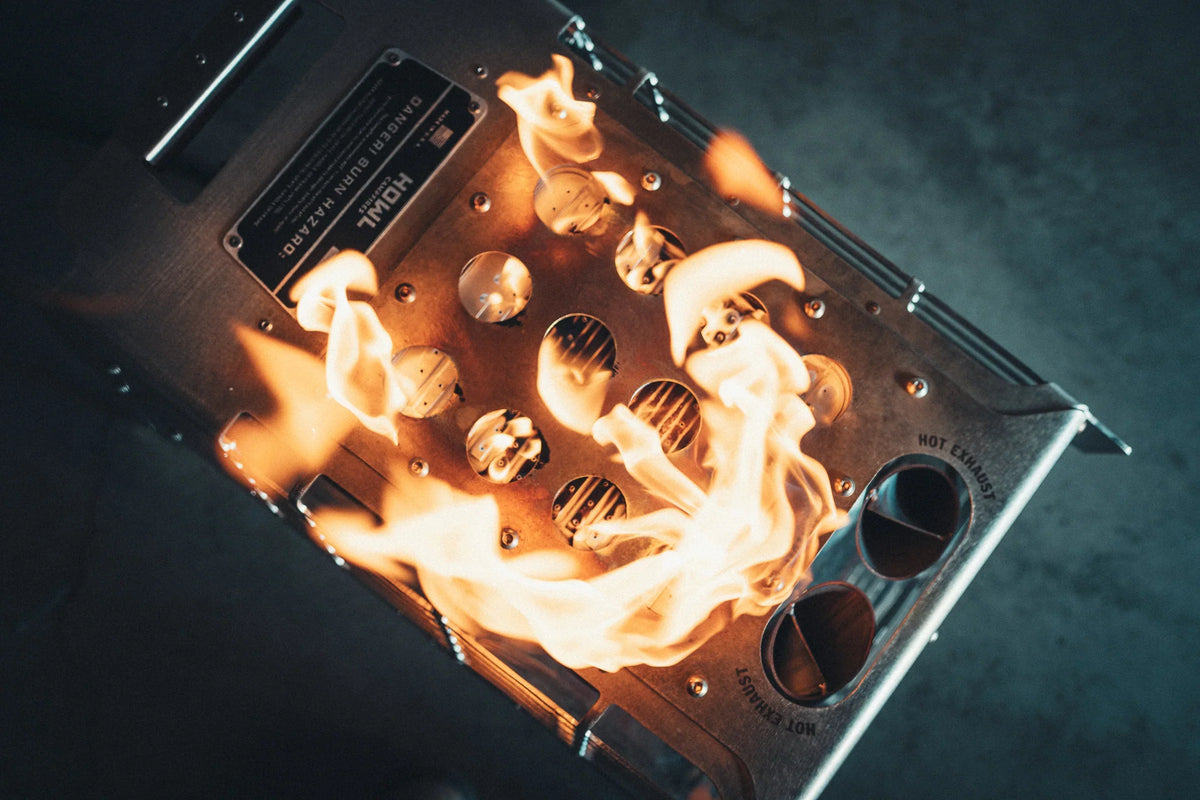
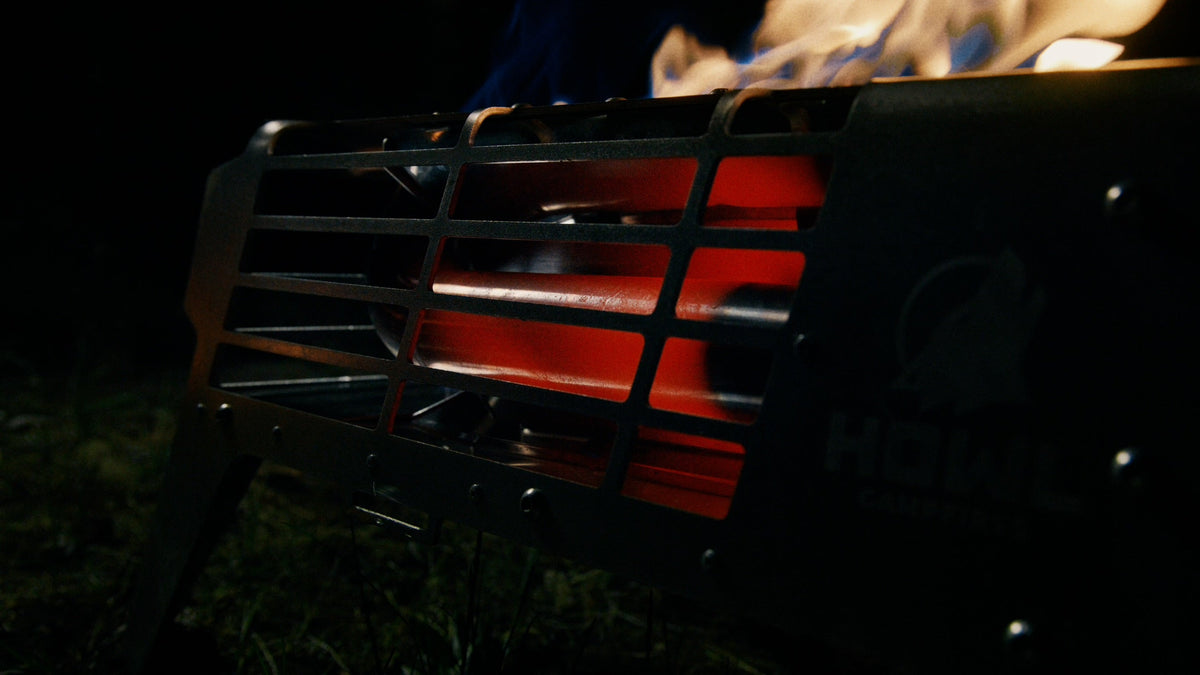
The secret is glowing-hot steel. Propane burns inside the BarCoal tubes until they glow like a bed of wood coals. The glowing tubes radiate heat outward, no matter the wind, rain, or snow – straight into your body.
There’s no smoke, embers, or sparks. Just the kind of heat that makes you step back, or turn to toast your other side.
Here’s how it works.
FLAMES MAKE LIGHT. BARCOAL MAKES HEAT.
Flames are pretty to look at. But most of their heat rises and blows away.
BarCoals are different. The glowing stainless steel tubes send infrared heat straight into your body. You get the same radiant warmth of a wood fire’s coal bed, but without burning wood.
The R3’s BarCoal tube runs at 1,100°F for three-season heat, keeping you comfortable down to 25ºF.
The R4’s BarCoal tubes run at 1,300°F for four-season heat, keeping you comfortable down to 0ºF.
DON’T BURN THE GROUND YOU’RE ON.
The BarCoal tubes get hot enough to make you move your chair. But inches below, the ground stays cool.
Making heat is one thing. Aiming it in a safe direction is another.
The EchoHeat Reflector Shield focuses that radiant heat toward your body and away from the ground below. Because that’s the mission: keep the forest and the fire alive.
BARCOAL KEEPS RIPPING IN 120 MPH WINDS.
And that’s just the strongest we’ve been able to measure.
Most propane burners light the fuel, then pull in the surrounding air to finish the combustion. That leaves the flames open to wind and easy to blow out.
BarCoal’s combustion happens inside a fully enclosed tube. The system draws all the air it needs from the bottom of the HOWL into a protected compartment. Then, it mixes air and propane in a precise ratio before ignition. The mixture burns inside the protected BarCoal tube, where wind can’t touch the flame.
It’s impervious to weather, wind, and every altitude on earth.
THE PROPANE PULLS IN AIR ON ITS OWN.
Other radiant tube heaters use electric fans to pull in enough air for complete combustion. But the BarCoal system is completely analog.
It uses the pressure of the propane tank to create a precisely shaped fuel jet that pulls air into the system.
Propane shoots through the jet at high speed. That moving stream pulls in the air, which mixes with the fuel and accelerates through a venturi straight into the burner head. That’s where it ignites.
The combustion is extremely fast and complete, reaching temperatures above 3,000ºF. The super hot flames and exhaust gases travel down the BarCoal tubes. A twisted tape turbulator spins the gases, pushing heat into the tube walls until the outside surface glows orange. That orange glow is the light you can see, but the tubes are glowing much brighter in the invisible infrared spectrum.
The infrared rays radiate out into your body, which absorbs the energy as heat, making you warm.
It took HOWL’s engineers three years, dozens of prototypes, and hundreds of tests to make that system work in a durable, portable, safety-certified campfire.
It’s actually kind of a miracle. There’s no fan, sensors, electronics or even a manual altitude adjustment. Just one carefully engineered system with no moving parts: Physics doing its job.
RAIN AND SNOW HAVE SOMEWHERE TO GO.
Water inside a BarCoal burner could slow the flow, make it run rough, or even put it out. The tubes run so hot that any rain or snow poured down them instantly vaporizes. But a cold HOWL sitting out in deluge could be affected, which is why every BarCoal tube has drain ports that let water escape instead of pooling where they can interfere with the burn.
Brush off the snow, light the HOWL, and get back to getting warm. Or, if you’re really feeling froggy, leave a foot of snow on top, light it, and let the HOWL melt itself out.
BarCoal technology is built into both the R3 and R4 Campfire. To find the right one for you, you just have to answer one question…
HOW MUCH HEAT DO YOU NEED?