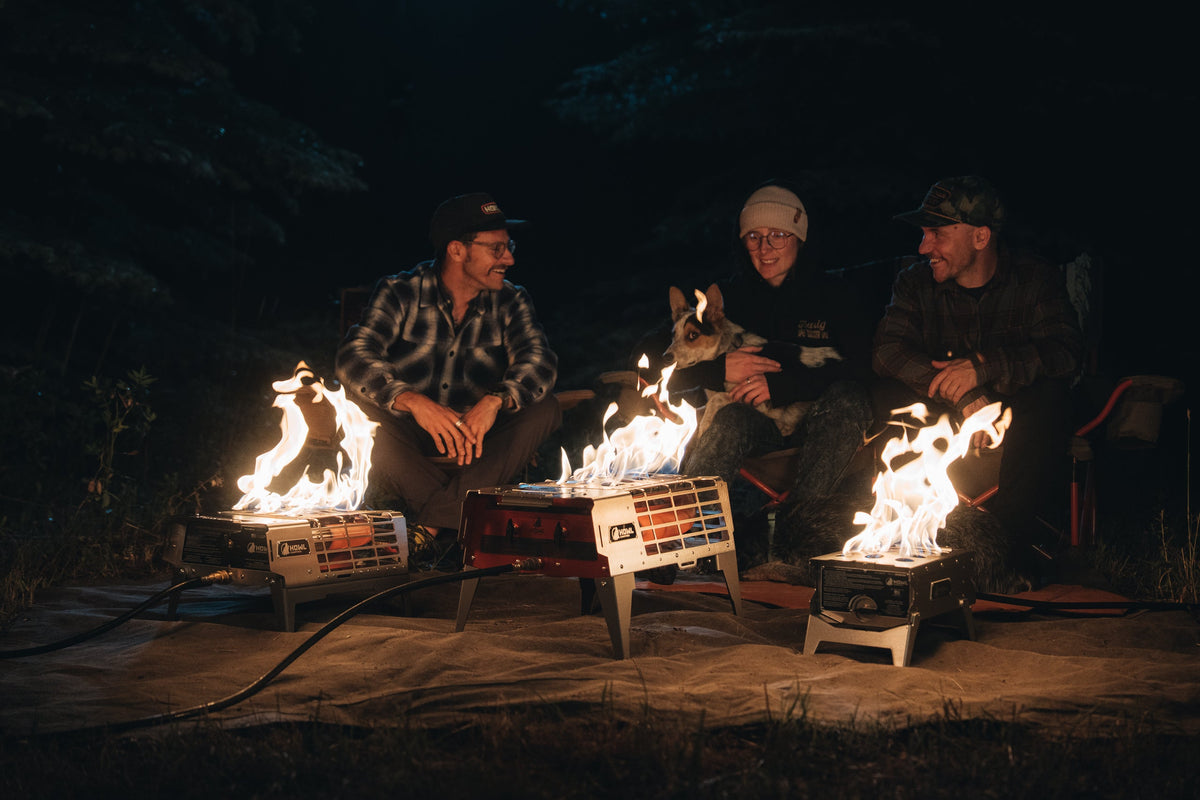

American manufacturing gets plenty of applause. Politicians promise to bring it back. Customers say they want more of it.
Those of us on the factory floor are trying to keep it going, with real people depending on the next production run.
Then metal prices climb, freight gets more expensive, and a supplier sends a new quote that can wreck the production plan. The factory owner has to find the money, keep the crew paid, and keep orders moving. The people making speeches don't have to make those numbers work. We do.
At HOWL, our main supplier of stainless-steel sheet-metal parts recently raised its quote by 40% overnight. We're responding by bringing that work into our Colorado shop, with 30 days to get a new production line running before our existing parts run out.
We're fighting like hell to keep building here in a system that publicly says it wants exactly that, while making the job more expensive. We're going to show what that fight actually takes.
What rising metal prices mean in our shop
The increases show up in national data, too. According to the Bureau of Labor Statistics' August 2026 producer-price report, prices for steel mill products were 23.4% higher than a year earlier, while aluminum mill shapes were 27.3% higher. Individual metals and orders move differently, but those figures show the pressure on two major manufacturing inputs.
For us, a higher metal bill leaves less money for the rest of production. We still have to pay the crew, run the machines, and get a finished campfire out the door. Nobody mails us a smaller rent bill because steel got more expensive.
In the National Association of Manufacturers' third-quarter 2026 survey, rising raw-material costs were manufacturers' top business challenge for the second quarter in a row. Freight rates and fuel costs were also widely reported concerns.
A higher bill leaves a manufacturer with hard choices: absorb the cost, raise its own prices, or change how it operates. We're choosing to change how we operate because we're trying to keep our people working in Colorado and keep your next campfire affordable.
When policies meant to help raise our costs

The White House has described its metals tariffs as a way to strengthen domestic production and protect American workers. That’s the public pitch. For a business like ours, metal costs aren't a talking point; they're real.
The government's own research has documented the problem. In its 2023 analysis of tariffs from 2018 through 2021, the U.S. International Trade Commission found that tariff-driven increases in steel and aluminum prices reduced production in American industries using those metals.
That is the part policymakers need to answer for. Making our materials more expensive means we have to find savings elsewhere just to keep operating on the same terms. The announcement can call that support. On the floor, it's yet another bill to work around.
If the goal is more manufacturing here, our ability to afford the materials has to be part of the plan. The crew working with those materials needs a business that can keep paying them.
That pressure doesn't stop when we buy from an American supplier or take on more of the production ourselves. We still need raw metal, equipment, and freight. Those costs reach our Colorado operation regardless of the flag somebody puts beside a policy announcement.
Diesel gets us on the way in and the way out
According to the U.S. Energy Information Administration, national on-highway diesel averaged about $6.20 a gallon on October 5, 2026, roughly $2.49 more than a year earlier. It had eased from the previous week, but it was still far above the year-earlier price.
Metal, parts, and machinery have to get to our Colorado shop before we can build a campfire. Higher diesel prices can raise those delivery costs, whether freight appears as a separate charge or gets included in the price of what we buy. Bringing fabrication in-house gives us more control over part production. We still have to get the raw metal and equipment here.
Shipping the finished HOWL adds another cost. We cover that bill on qualifying free-shipping orders. When customers pay shipping, it adds to their total purchase price. Either way, higher freight costs make it harder to keep a Colorado-built campfire affordable.
Giving the finger to the 40 percent hike

That 40% overnight increase was for fabricated stainless-steel parts. It put the work we buy from that supplier on terms that threaten the Colorado operation we’ve spent years building. We’re going to make those parts ourselves. We’ll invest in our own capability before we accept that damn hike as the way this business has to run.
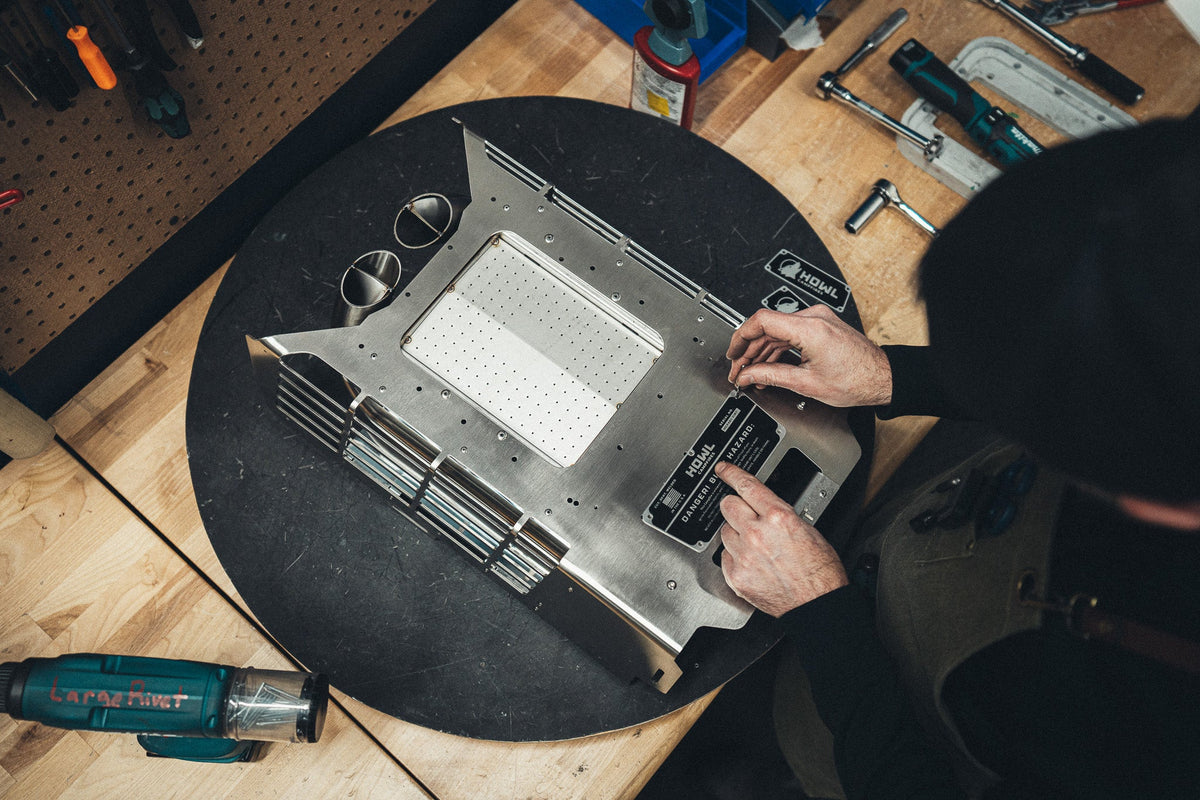
We're bringing in a CNC laser cutter, a CNC press brake, an automated sanding machine, and the safety equipment needed to run them. We've leased more space, and we'll hire and train a team to operate the new line.
Normally, that work would take three to four months. We have 30 days until our existing parts run out. That’s the insane deadline we’re working toward as we build up stock for the holidays.
The equipment has to arrive and be installed, and the new team needs training. Then the line has to produce parts we can use consistently. Even a very expensive machine has an awkward stage between showing up and earning its keep.
We’ve been taking on more of our own manufacturing for years. As we explained in our earlier look at rising metal costs, that has included a custom machine from Portugal to polish curved BarCoal tubes, stamping our A-Flames, and adding a robotic welding arm.
Taking more control takes real money
Bringing more production in-house puts more decisions in our hands. It also puts equipment, maintenance, training, and production problems on our books. We know that. We’re taking it on because the alternative is to let more of our costs be decided somewhere else.
We're investing now to give ourselves a better shot at holding the prices you pay. That means getting the process right and producing enough usable parts to justify the equipment.
Those investments commit money before the new line earns a dollar. That is what expanding American manufacturing requires from the people doing it. Enthusiasm helps morale; it has yet to make a payment on a press brake.
Support that reaches the factory floor

From our side of the floor, we need support to buy materials, invest in equipment, and train people without making the next production run harder to afford. Predictable rules matter because we’re committing money to machines and people long before the payoff arrives.
We're fighting a system that keeps asking manufacturers to do more here while adding costs to the work. The people making those decisions should sit down with the people buying the steel, paying the freight, and making payroll. Stay long enough to see what a new quote does to a production plan. Then tell us how the policy is helping.
Customers have a part in this, too, within their own budgets. Ask companies what work they actually do here. Look at whether they're investing in their people and their production. Share the stories of businesses doing that work, even when you're not shopping.
We're going to show more of ours: the machines, the setbacks, the costs, and the people working through them. Keeping manufacturing here deserves that kind of visibility. The difficult decisions usually happen long before a finished product reaches a customer's backyard.
We can't promise HOWL prices will never rise. We can promise we'll do absolutely everything in our f*cking power to keep our people paid, keep building in Colorado, and hold the prices you pay.
P.S. Some people go shopping for a jacket when they're pissed off. We're getting a laser cutter. The delivery instructions are a little more complicated.